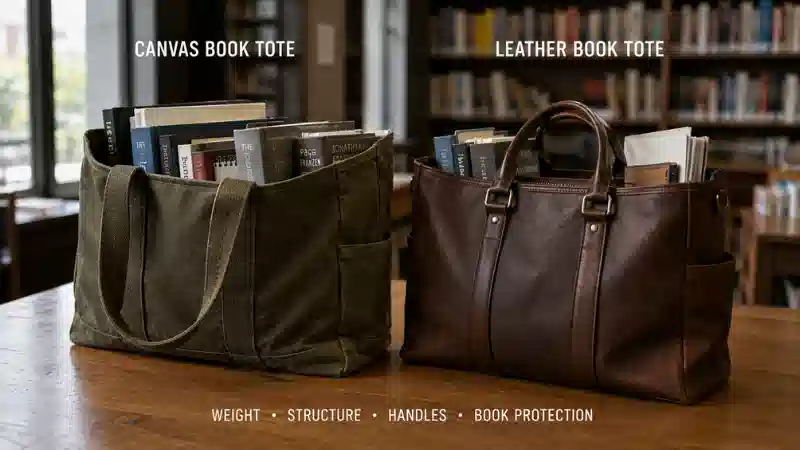
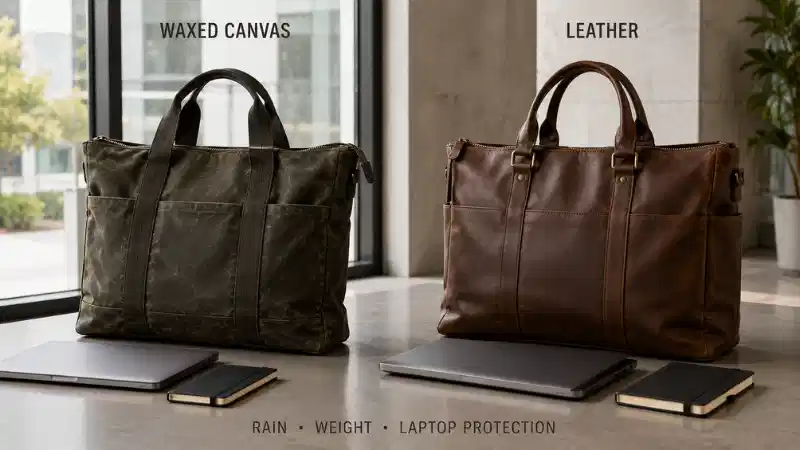
This guide gives you a straight comparison across durability, maintenance, cost, style, and sustainability. No brand bias, no padding - just the information you need to decide with confidence.

What Canvas and Leather Actually Are
Canvas is a plain-woven fabric, typically made from cotton or linen. It's sturdy, flexible, and breathable. Standard canvas isn't waterproof, but waxed canvas - treated with paraffin or beeswax - adds serious weather resistance and is a separate category worth understanding on its own. If you've seen "cotton canvas" labeled differently from plain "canvas," those distinctions in weight, weave, and durability are real; our breakdown of cotton tote bags vs canvas tote bags covers the differences in full.
Leather is made from animal hide - most commonly cowhide. The quality varies far more than most people realize. Full-grain leather, the outermost hide layer with minimal processing, is the most durable and develops the richest patina over time. Top-grain leather is sanded for uniformity. "Genuine leather" - despite its confident-sounding name - is the lowest processed grade, significantly less durable than the label implies. If you're investing in leather, the grade matters more than the word "leather" on the tag.
Canvas vs Leather: At a Glance
| Feature | Canvas | Leather |
|---|---|---|
| Weight | Lightweight | Heavier |
| Durability | High (waxed: very high) | Very high (full-grain) |
| Water resistance | Low (waxed: high) | Low unless treated |
| Maintenance | Low | High |
| Eco-friendliness | High (organic and recycled options) | Low (conventional production) |
| Starting price | Budget to mid-range | Mid-range to premium |
| Best style fit | Casual, creative, everyday | Professional, formal, luxury |
| Improves with age | No - may fade or stain | Yes - develops patina |
| Repairability | DIY-friendly | Requires a professional |

Canvas Bags: Where They Shine and Where They Don't
What Canvas Does Well
It's noticeably lighter. Canvas weighs a fraction of what leather does. Carry a bag through a full commute, a day of errands, or a long trip, and the difference in shoulder strain adds up quickly. For daily use, lighter almost always wins.
Maintenance is minimal. Most canvas bags can be wiped down with a damp cloth or run through a washing machine on a gentle cycle. Leave a leather bag unconditioned through a dry summer, and you'll understand exactly why that low-maintenance quality is worth something. If you're wondering how canvas handles dirt and everyday grime in practice, this guide on canvas bag cleanliness covers what to expect and how to manage it.
The price range is genuinely wide. Canvas bags span from functional sub-$20 totes to well-crafted pieces above $150. You can find a reliable, good-looking canvas bag without a significant investment - useful if you want different bags for different occasions.
Eco-friendly options are real, not just marketing. Organic cotton canvas avoids synthetic pesticides and chemical-heavy processing. Recycled canvas options reduce material waste further. Conventional leather tanning, by contrast, uses chromium-based chemicals associated with water contamination. The Global Organic Textile Standard (GOTS) independently certifies organic fiber products - including canvas and cotton bags - so you can verify claims rather than take a brand's word for it. For what those certifications actually mean, this overview of eco certifications for tote bags is a practical reference.
Where Canvas Falls Short
Standard canvas is not waterproof. A sudden rainstorm with an untreated canvas bag puts your contents at risk. Waterproofing spray helps, but it requires reapplication - especially after washing. It's not a one-time fix.
It reads as casual. Even a structured, well-made canvas tote doesn't carry the same professional signal as a leather briefcase. In formal or client-facing environments, that distinction matters. Canvas fits creative offices, weekend markets, and travel days - not board presentations.
Light colors show wear over time. White and natural canvas can stain and yellow in ways that darker bags don't. Worth knowing before you buy a pale canvas bag you plan to carry everywhere.

Leather Bags: Where They Shine and Where They Don't
What Leather Does Well
Longevity is real - when the leather is good and the care is consistent. A quality full-grain leather bag, maintained properly, can last 15 to 30 years. The structure holds, the leather softens rather than cracks, and the surface deepens in a way that looks intentional rather than worn out. Few other materials can match that kind of arc.
It fits professional environments. A clean leather briefcase or tote communicates seriousness and attention to detail without effort. In finance, law, consulting, or any client-facing role where appearance is part of the job, leather remains the natural choice.
It gets better with use. This is leather's most compelling quality - and nothing else replicates it convincingly. A bag that starts stiff and structured slowly softens, develops surface depth, and becomes distinctly yours. Synthetic materials and canvas simply don't do this.
Where Leather Falls Short
Maintenance is non-negotiable. Leather needs conditioning every three to six months to stay supple. It absorbs oils and stains faster than most people expect. Get it wet and dry it near a heat source, and it can warp or crack permanently. This is manageable, but it's a real ongoing commitment - not everyone wants to care for a bag the way you'd care for a piece of furniture.
It's heavy. A medium-sized leather tote adds noticeable weight before you've packed a single item. Over a full commute or travel day, that adds up on your shoulder in ways that become hard to ignore.
"Genuine leather" is a misleading label. Many buyers discover this after the purchase: bags labeled "genuine leather" at accessible price points are made from the lowest processed grade of leather - more prone to peeling and cracking than full-grain or top-grain. The real cost of buying cheap bags is often a second purchase far sooner than expected.
Repairs require a professional. A torn seam on a canvas bag can often be fixed at home. Leather damage - scratched surfaces, cracked handles, worn corners - needs a leather repair specialist to fix properly, and quality repair isn't inexpensive.
Environmental concerns are documented. Conventional leather tanning uses chromium compounds and significant water resources. The Leather Working Group audits tanneries for environmental performance - their certification is the most credible signal of responsible sourcing in the industry. If sustainability matters to you, it's worth checking whether a brand sources from rated tanneries. For a broader look at how different bag materials compare on sustainability, this material sustainability guide is a useful reference.
Which Bag Fits Your Situation?
Material specs only tell part of the story. Where and how you use a bag matters just as much as what it's made of.
Daily commuting and errands: Canvas. It's lighter, easier to clean when something spills, and handles the rough demands of daily use without requiring careful management. A structured canvas tote handles a laptop, lunch, and daily carry without any strain.
Work and business settings: Leather, in most cases. A clean leather briefcase or structured tote projects professionalism in client-facing roles and formal industries. In creative or tech environments, a well-made canvas or waxed canvas bag fits just as naturally.
Travel: Canvas or waxed canvas. Travel is hard on bags - overhead bins, cobblestones, variable weather. Canvas is lighter (helpful for baggage limits) and less stressful when things get rough. For a fuller breakdown by trip type and distance, this travel bag selection guide matches bag type to travel scenario. If you're specifically looking at casual or beach use, a heavy-duty canvas beach bag shows how far canvas construction has come for active, outdoor conditions.
Casual and weekend use: Canvas, almost always. Weekends call for light carry and zero maintenance anxiety. Whether you're at a farmers market, a beach, or just running around town, canvas fits both the setting and the pace.
As a significant gift: Leather, if the budget allows and the recipient suits a more formal aesthetic. Canvas for a practical everyday recipient who values ease of use over luxury signaling.

Waxed Canvas and Vegan Leather: Two Options Worth Knowing
Waxed canvas - canvas treated with paraffin or beeswax - is one of the most underrated bag materials available. It repels water, develops surface character over time in a way that's comparable to leather's patina, and can be re-treated with wax to extend its life. It has a long track record in military field gear, marine applications, and quality outdoor equipment. For buyers who want weather resistance and long-term durability without leather's weight, cost, or animal-product concerns, waxed canvas is the most practical bridge between the two materials.
Vegan leather - most commonly PU (polyurethane) leather - is a synthetic alternative designed to look like leather. It avoids animal products and is usually priced lower than genuine leather. The tradeoff: PU leather tends to peel and crack after a few years rather than aging gracefully, and it's made from petroleum-based plastics, which means it isn't biodegradable. If sustainability is a factor in your decision, this guide on eco-friendly bag trends is worth reading before assuming vegan leather is the greener choice. Newer plant-based alternatives - cactus leather, apple leather, mushroom leather - are improving in durability but remain niche and premium-priced.
The Real Cost of Canvas vs Leather
Leather costs more upfront. That's straightforward. What's worth thinking through is value over time.
Quality canvas bags typically run from around $20 for functional everyday totes to $120 or more for well-constructed pieces. Quality leather bags start around $100 to $150 for decent top-grain options and rise substantially for full-grain or premium construction. A quality leather bag used daily for ten years may cost less per year than a mid-range canvas bag replaced every two to three years - the math depends on actual lifespan, which depends on care and build quality more than material alone.
The real risk in cost terms isn't choosing canvas over leather. It's buying cheap "genuine leather" expecting leather's longevity, or buying canvas for a formal setting where it doesn't belong. Both decisions lead to a second purchase sooner than expected.
Caring for Your Bag: The Practical Basics
Canvas Care
- Wipe regularly with a damp cloth and mild soap for surface dirt
- Machine wash on cold, gentle cycle - air dry completely, never tumble dry
- Apply waterproofing spray to add water resistance; reapply after each wash
- Store lightly stuffed or flat to maintain shape
For a more detailed walkthrough of protecting canvas in the long term, this canvas and cotton bag care guide covers the full process.
Leather Care
- Wipe down with a soft dry cloth after each use to remove surface oils and dust
- Condition every three to six months with a quality leather conditioner
- Blot - never rub - if the bag gets wet, then air dry away from direct heat
- Store stuffed with tissue paper to hold shape, in a dust bag or pillowcase, out of direct sunlight
- Take structural damage - cracked handles, deep scratches, torn seams - to a professional leather repair specialist
Frequently Asked Questions
Which is more durable, canvas or leather?
Both are genuinely durable, but in different ways. High-quality full-grain leather, consistently maintained, can outlast most canvas bags by decades. Waxed canvas approaches leather in durability and handles rough conditions with less fuss. For most buyers, construction quality matters more than the material itself - a well-made canvas bag outlasts a poorly made leather one every time.
Are canvas bags appropriate for professional settings?
It depends on the industry. In creative, tech, or casual office environments, a structured canvas tote fits without issue. In formal settings - finance, law, client-facing corporate roles - leather remains the stronger choice. The question is less about the material and more about whether the bag looks intentional and well-maintained.
Is canvas or leather better for travel?
Canvas is the practical choice for most travel. It's lighter, handles the physical demands of transit better, and is less stressful to manage when conditions are unpredictable. For business travel where professional appearance at the destination matters, leather may be worth the extra weight. Our guide to the five essential travel bag types breaks this down further by trip type.
What is waxed canvas, and how does it compare to leather?
Waxed canvas is canvas treated with wax to add water resistance and increase durability. It develops visible surface character over time, ages in a way similar to leather, and can be re-waxed to extend its life considerably. For buyers who want leather-like durability and weather performance without the weight, cost, or animal-product concerns, waxed canvas is the closest practical alternative. It lacks leather's formal aesthetic, but it's a serious material with a long performance track record.
Is canvas more eco-friendly than leather?
Organic and recycled canvas generally has a lower environmental impact than conventionally produced leather, which uses chromium-based tanning chemicals and significant water resources. That said, a leather bag used for 20 years may have a lower per-year footprint than a canvas bag replaced every two years. Sustainability depends on lifespan and sourcing, not just the material label.
The Bottom Line
Canvas and leather solve different problems. Canvas works best for everyday carry, travel, and anyone who values practicality, lighter weight, and low maintenance. Leather earns its place in professional settings and for buyers who want a bag that genuinely improves over years of use - and are willing to do the maintenance it requires.
Start with your primary use case. If you commute daily, travel frequently, or want a bag that's easy to live with, canvas - or waxed canvas - is the right call for most people. If you need a bag that holds up in a formal environment and you'll actually keep up with conditioning it, leather is a worthwhile investment. If you're still weighing materials more broadly, this comparison of natural bag fabrics extends the conversation well beyond just canvas and leather.