For a long time, the term "sustainable" came with a lot of baggage. It was linked to higher costs, complex lifestyle changes, and even complete transformations of how we live and work. For businesses, it seemed that only large corporations with their own sustainability teams could afford to focus on it.
This perception is slowly but steadily changing.
Today, families, small businesses, retailers, and creative professionals alike are increasingly recognizing that true sustainability often doesn't stem from a single, groundbreaking initiative, but from a series of practical habits integrated into everyday life. These habits don't require perfection, but consistency.
Whether you run a small business, organize events, work freelance, or simply want to reduce waste, eco-friendly practices tend to work best when they become a natural part of your life, not something you have to force yourself to do. These habits are reflected in the bags you use, the products you buy, the lifespan of those products, and whether you think twice before replacing perfectly usable items.
This article describes ten truly effective eco-friendly trends that can sustainably transform your daily life and work. Each habit can stand on its own. You don't have to implement them all at once. In fact, the most sustainable approach is often to start small, stick with proven methods, and gradually expand.
Why everyday eco-friendly choices matter more than grand pronouncements
When sustainable development is reported in the news, the conversations often revolve around global goals, climate agreements, or comprehensive regulations. While these discussions are important, they often seem far removed from everyday life.
In reality, most environmental impact stems from everyday decisions: what we buy, how long we use it, how we dispose of it, and whether we prioritize convenience or durability.
For individuals, this can mean choosing eco-friendly bags instead of plastic bags. For businesses, it can mean investing in more durable products, even if the initial purchase costs are slightly higher. Over time, these decisions add up.
The power of everyday habits lies in their ability to create a significant impact subtly. When one person starts using reusable items, it's a small success. But when this habit spreads in the workplace, in stores, or in the community, its impact multiplies – without constant reminders or campaigns. This is where many practical sustainable living tips quietly make the biggest difference.
1. Replace single-use plastic bags with eco-friendly bags.

Reusable shopping bags are often the first eco-friendly trend people develop – and for good reason. They are simple, obvious, and easy to integrate into everyday life.
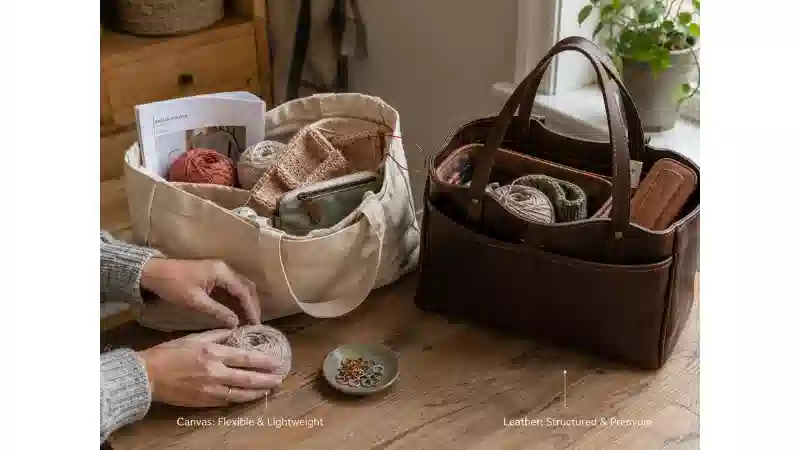
What has changed in recent years is not people's environmental awareness, but the quality of the shopping bags. If a shopping bag is well-made, comfortable to carry, and has a simple, versatile design, it is more likely to be reused. A thin, easily deformable shopping bag is rarely reused. A sturdy bag made of canvas or cotton is often the preferred choice.
Studies frequently cited in sustainability discussions show that a durable, reusable shopping bag, with regular use, can replace hundreds of single-use plastic bags over its lifespan. While the exact numbers vary depending on usage, the principle is clear: durability is crucial.
A practical way to develop this habit:
- Keep reusable shopping bags in an easy-to-remember place – for example, next to the door, in the car, or folded in your backpack.
- Start with a few high-quality eco-friendly bags instead of accumulating dozens.
- Wash them regularly to keep them clean, and you'll be more likely to use them.
Reusable shopping bags aren't just for grocery shopping. You can also use them for farmers' markets, office supplies, gym clothes, library books, and even short trips. This versatility is what makes them so practical.
2. Choose fewer, but higher-quality products
One of the most effective environmental trends is buying fewer, but better-quality products.
In both their personal and professional lives, people are moving away from the habit of frequently buying cheap goods and are instead opting for durable products. This applies to clothing, bags, kitchen utensils, office supplies, and promotional items.
The logic is simple: if a product lasts twice as long, it doesn't need to be replaced as often, which reduces waste, resource use, and long-term costs. Many sustainable shopping tips are built around this same idea-buy intentionally, not impulsively.
3. Prioritize regional sourcing and shorten supply chains
Another practical, environmentally friendly habit is focusing on the origin of products.
Buying regional products – or manufacturing them close to the point of use – reduces transport emissions and generally increases transparency. Shorter supply chains are also typically more resilient, with fewer delays and smoother communication.
In everyday life, this can mean shopping at farmers' markets, choosing regionally produced goods, or supporting local service providers in your area. For businesses, this can mean sourcing raw materials domestically or entering into partnerships with regional companies.
In the US, the long transport distances for food and consumer goods to the end consumer are frequently cited as a problem. Although global trade is inevitable, even small shifts towards regional products can reduce environmental impact and strengthen the local economy.
This habit doesn't mean completely rejecting global products. It means consciously choosing regional products when regional alternatives are available and practical.
4. Consider packaging as part of the product experience
In the past, people disposed of packaging without a second thought. Today, packaging is increasingly viewed as part of the overall product experience.
Consumers notice when packaging is excessive, wasteful, or difficult to recycle. They also appreciate packaging with multiple uses – such as reusable containers, cloth bags, or boxes specifically designed for storage.
In everyday life, this can be as simple as choosing products with minimal packaging or bringing your own containers for bulk purchases. In professional life, it can mean rethinking the packaging of items for customers or events.
Good packaging doesn't have to be elaborate. It needs to be functional. When the function of packaging goes beyond mere protection – for example, for storage, reuse, or transport – it becomes a value, not waste.
5. Choose designs that encourage long-term use
Design has a direct impact on sustainability, even though this is often overlooked.
Items that quickly go out of style are more likely to be discarded, even if they are still usable. Simple, timeless designs, on the other hand, generally last longer.
This is especially true for items like bags, clothing, and everyday accessories. Neutral colors, simple cuts, and practical sizes make it easier to integrate clothing items into various occasions.
For individuals, this could mean choosing a bag or coat that is suitable for all seasons. For businesses, it could mean choosing designs that fit a long-term brand image instead of following short-lived trends.
Sustainability is not limited to materials alone. It's also about emotional durability – how long people are willing to use a product.
6. Encourage eco-friendly trends without pressure
One of the most effective sustainability strategies is the gradual implementation approach.
People generally respond better to gentle suggestions than to preachy or guilt-inducing rhetoric. Making eco-friendly tends the default is often more effective than simply trying to convince people with data.
In everyday life, this could mean bringing a reusable water bottle or coffee cup so you don't have to think about it later. In the workplace, it could mean offering reusable alternatives as the standard and giving employees the option to opt out if needed.
Small tips – such as care instructions to extend product lifespan or reminders about reusable products – can help people develop better habits without encountering resistance.
7. Use reusable bags as everyday helpers, not just for shopping
Reusable bags reach their full potential when they are perceived as versatile helpers.
Those who use them the most don't just use them for shopping. They are also used for commuting, organizing, carrying books, packing lunches, and even storing items at home.
Because these bags are ubiquitous in public spaces, they help make reuse the norm. Seeing others use sturdy bags reinforces the idea that reusable bags are standard and nothing out of the ordinary.
This habit requires no extra effort-it's simply a matter of changing your perception of the bag's purpose.
8. Integrating environmentally friendly choices into everyday life

The most sustainable habits are those that don't require constant decision-making.
When environmentally friendly choices become part of your daily routine, they no longer feel like extra work.
Examples: Only run the washing machine and dishwasher when they are full. Dry laundry on a clothesline whenever possible. Plan meals to reduce food waste. Use LED lighting and switch off appliances when not in use.
In the office, this could mean standardizing office supplies, reducing unnecessary printing, or implementing a user-friendly recycling and composting system.
Automation and daily habits reduce resistance. Once a habit is established, it's easier to maintain it in the long term.
9. Keeping cost-effective sustainability in mind
A common misconception is that sustainable living is always more expensive. In fact, many environmentally friendly habits can save money in the long run.
Durable products reduce replacement costs. Energy-efficient appliances lower electricity bills. Less food waste saves money on grocery costs.
For individuals, small changes – such as eating vegetarian meals several times a week or buying secondhand items – can significantly reduce environmental impact without increasing costs.
For businesses, investing in durable materials and consistent design often leads to better cost control and reduces impulse purchases.
Sustainability works best in combination with economic viability.
10. Enabling flexibility in sustainability
It's okay if not everyone adopts environmentally friendly habits at the same pace.
Sustainability is a gradual process. Some people go all in, others make some changes and then stop. Both contribute to progress.
The key is to offer choices, not exert pressure. Offer both reusable and disposable items as needed. Provide clear information, not judgment. Let people decide for themselves what works for them.
More people will participate if sustainability is achievable and not perceived as a burden.
Further considerations: Why reusable shopping bags are important in the long term.
Reusable shopping bags interestingly combine everyday habits, practicality, and visibility. They are among the few environmentally friendly items that are used regularly and in public.
Because they are multifunctional, they have a longer lifespan than short-lived trend items. Over time, they become part of everyday life and are not just a symbol.
Anyone interested in sustainable alternatives – whether for personal or professional use – should be familiar with the different styles, materials, and sizes to find out which ones truly suit their needs and lifestyle.
Our goal is not to follow every trend, but to select products that integrate seamlessly into everyday life.
Sustainability doesn't have to be complicated or perfect to be effective.
What truly brings about significant change are often seemingly insignificant habits: extending the lifespan of objects, choosing practical and durable designs, reducing unnecessary waste, and developing the habit of making better choices without conscious effort.
Whether you run a business, manage projects, or simply want to reduce waste in your life – these ten habits offer a practical starting point. Each habit has its own advantages and only unfolds its full effect when practiced consciously.
True progress comes from the sum of many small steps. Start with one habit that fits your current lifestyle. Once it becomes a habit, add another. That's how sustainable change happens.