But that is more or less what happened. Here is the full story - where the word came from, who made the first one, and how a bag designed to haul ice became one of the most widely carried objects on earth.

Where Does the Word "Tote" Come From?
The verb to tote, meaning to carry or transport - especially something heavy - first appears in written American English in Virginia in 1677. Its precise origins remain contested. The Merriam-Webster Dictionary classifies it as an Americanism of uncertain etymology; some researchers have proposed West African roots, others point to older English dialect words, but no single origin has been established.
By the late 1800s, tote was informal everyday usage across the United States. The compound tote bag appears in print around 1900, describing any open-topped bag carried by hand. The design we recognize today would take another four decades to arrive.
Who Invented the Modern Tote Bag?
The modern tote bag was invented by L.L. Bean in 1944. The original design - called the Boat and Tote - was a heavy-duty canvas bag built to carry blocks of ice on hunting and fishing trips in Maine. It remains in production today, in nearly the same form it launched in eighty years ago.
The Birth of the Modern Tote Bag (1944–1950s)
Leon Leonwood Bean founded L.L. Bean in 1912 in Freeport, Maine, with a single product: a waterproof hunting boot. As his business grew, Bean expanded into outdoor clothing and equipment for the hunters and fishermen of New England.
By 1944, his customers needed a practical way to transport large blocks of ice during extended trips - essential for keeping food cold before electric coolers were standard. L.L. Bean's solution was the Boat and Tote: wide, flat-bottomed, made from heavy-duty canvas, with handles thick enough to grip under weight. It was built for function. Style wasn't part of the brief.
The bag's durability, however, made it adaptable. By the 1950s, homemakers across New England were using it for grocery runs and household tasks. The same flat base and wide opening that made it ideal for ice blocks worked equally well for a week's worth of shopping. The cotton shopping bag had moved well beyond its original context - and the tote bag's long journey from utility to culture had begun.
How Tote Bags Became a Fashion Statement in the 1960s
L.L. Bean updated the Boat and Tote in the 1960s with one deliberate addition: colored canvas trim. The functionality didn't change, but the visual signal did. Canvas, long regarded as an industrial material, was starting to be seen differently.
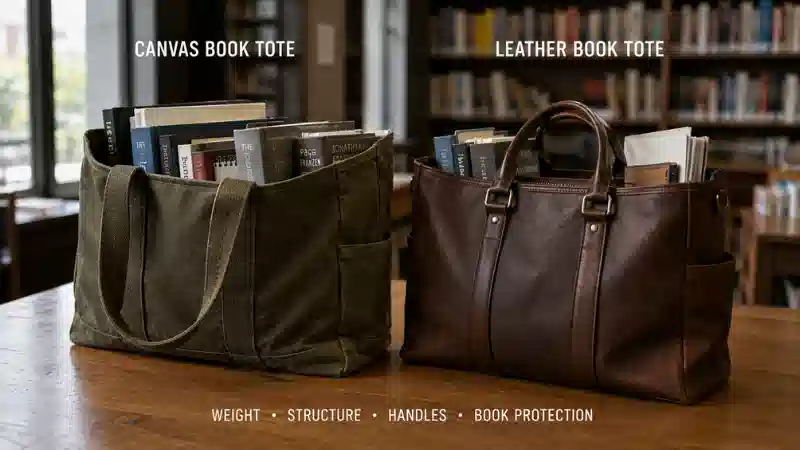
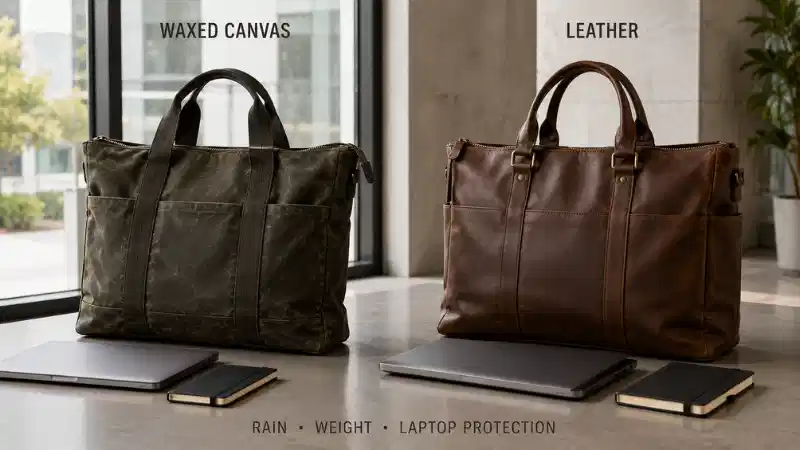
The more decisive fashion turn came from Bonnie Cashin (1908–2000), a pioneering figure in American fashion design. Where L.L. Bean was making canvas work bags, Cashin designed the Cashin Carry Tote - a leather bag with clean lines, an open silhouette, and her signature turn-lock hardware. It was the first serious argument that a tote-style bag could belong in a designer's collection, not just a sporting goods catalog. The distinction between canvas utility bags and designed fashion totes that Cashin established still shapes how the market is organized today.
At the same time, the counterculture was making its own claim on the canvas bag. The generation that rejected synthetic materials and mass-market packaging found in the plain canvas tote an object that matched its values. Decorated with hand-painted slogans or left unadorned, these bags became markers of a specific identity - one that valued authenticity over polish. That association between tote bags and progressive cultural values, first established in the 1960s, has never fully faded.
The 1970s and 1980s: Bags That Said Something About You
The 1970s didn't produce a landmark tote bag design, but they shifted the cultural conditions that surrounded it. Second-wave feminism was remaking everyday wardrobes, and the practical shoulder-worn tote fit naturally into clothing built for working lives. Environmental awareness was also crystallizing - the first Earth Day was held in 1970, and with it came a growing discomfort with disposable culture. Tote bags fit into both conversations without trying to.
These currents came together more visibly in the 1980s, when New York's The Strand bookstore introduced its branded canvas tote: natural cotton duck canvas, the store's name printed in bold red. It became one of the most recognized bags in the city - not because it was expensive or rare, but because of what it communicated.
Carrying a Strand tote said something legible and specific: this person reads. This person spends time in bookstores. This person has taste. The object was secondary to the signal.
Art museums, public radio stations, literary magazines, and universities followed the same logic. The tote bag was now communicative - it told a story about its owner without a word being spoken. This shift planted the seeds for what would become an enormous industry in branded and promotional tote bags, with institutions and businesses recognizing that a well-designed bag carried meaning far beyond its contents.
The Eco-Awakening: 1990s Through Anya Hindmarch's 2007 Moment
Through the 1990s, the environmental case against single-use plastic bags was building. Scientific coverage of plastic pollution in oceans and landfills made visible what had previously been easy to overlook. The tote bag - reusable, simple, not plastic - was the obvious alternative. Alongside reusable polyester bags, it became part of a broader shift in how people thought about disposable packaging.
Governments began to respond. Ireland introduced a plastic bag levy in 2002 - a small charge per bag at checkout. Plastic bag usage fell by more than 90 percent within the year. Other countries studied the model. The message was clear: the era of the free disposable plastic bag was ending, and the reusable tote was no longer a niche preference.
The cultural turning point came in 2007. British designer Anya Hindmarch launched a bag called "I'm NOT a Plastic Bag" - a plain cotton tote printed with those five words in black text, priced to be accessible. It caused queues outside stores across multiple countries on its release day, sold out within hours in several markets, and attracted international press coverage that no conventional fashion campaign could have generated. On secondary markets, it sold for multiples of its retail price.
What the campaign actually did was make environmental conviction look like something desirable, not merely obligatory. The tote bag crossed from responsible alternative to genuine cultural object - and that repositioning has held. More on how this trajectory has continued: why buyers in 2025 are still moving away from plastic toward reusable alternatives.

The Tote Bag Today: Social Media, Luxury, and Policy
Instagram made the tote bag a visible identity signal at a new scale. The literary tote became especially prominent: bags from independent bookshops, cultural institutions, and publishing houses communicated specific values in a format designed to be photographed. The Strand's logic from the 1980s was playing out globally, one post at a time, as eco-conscious consumer habits went mainstream.
For businesses, the branded tote bag became a reliable marketing format. Unlike most promotional items, a well-made tote gets used publicly, repeatedly, for years - each use a brand impression in a real environment. The range of printing methods for tote bags - screen print, heat transfer, embroidery, and others - made customization accessible at almost any volume, from small runs to large-scale OEM production.
At the premium end, luxury brands built entire product lines around refined tote silhouettes. Toteme, The Row, Polène, and Mansur Gavriel developed devoted followings among consumers who wanted the utilitarian form with better materials and craftsmanship. Prada, Celine, and Loewe made tote-style bags central to their seasonal offerings. The form that started in a sporting goods store in Maine was, in some of its iterations, now selling for thousands of dollars.
Policy continued to accelerate adoption. As of 2025, single-use plastic bag restrictions are in effect in more than 60 countries and across multiple U.S. states. Where those restrictions apply, carrying a reusable bag is no longer a preference - it is simply what people do.
Are Tote Bags Actually Eco-Friendly?
Given how much of the tote bag's modern identity is tied to sustainability, the question deserves a direct answer: it depends on the material and how often you use it.
A conventional cotton tote requires significantly more water and energy to produce than a single plastic bag. Research on bag lifecycle assessments - including well-cited work from the Danish Environmental Protection Agency - has found that cotton bags need to be used dozens to hundreds of times before that production footprint is offset by avoided plastic bag use. The exact number varies by methodology, but the implication is consistent: the bag earns its environmental credentials only through actual, sustained use. A detailed look at how many times a cotton bag needs to be used to break even helps set realistic expectations.
Material choice complicates the picture further. Among natural options, cotton, jute, and canvas each carry different production footprints. Jute generally requires less water than conventional cotton. Canvas and cotton totes differ in weight and durability, which affects how long they hold up and therefore how sustainable they are over time.
Synthetic alternatives add another dimension. Recycled polyester (RPET) bags divert plastic from landfill during production. Non-woven bags are lightweight and cost-efficient but less durable. There is no single answer to which bag material is most sustainable - it depends on intended use, required lifespan, and what "sustainable" is being measured against.
For organizations sourcing bags at scale, environmental certifications for tote bags provide a more reliable benchmark than material labels alone. For individuals, the most useful question isn't what the bag is made of - it's whether you will actually use it, regularly, for years. That's where the environmental benefit lives.
Frequently Asked Questions
Who invented the tote bag?
The modern tote bag was invented by L.L. Bean in 1944. The original design - the Boat and Tote - was a canvas bag built for transporting ice during hunting and fishing trips in Maine. It is still in production today.
When was the first tote bag made?
The modern tote bag dates to 1944. The word "tote" appears in written English from 1677, and the compound term "tote bag" enters print around 1900 - but the design we recognize today was created by L.L. Bean's team.
What was the original purpose of the tote bag?
L.L. Bean designed the Boat and Tote specifically to carry large blocks of ice during outdoor trips. It was a utility tool, not a fashion item. Homemakers in New England began using it for groceries and everyday tasks in the 1950s, which started its shift toward mainstream use.
Why did tote bags become so popular?
Three things converged: growing concern about plastic bag pollution created demand for reusable alternatives, institutional tote bags (from bookstores, museums, and universities) made the bag a form of identity expression, and the 2007 Anya Hindmarch campaign made choosing a reusable bag feel fashionable rather than obligatory. Social media amplified all of these forces through the 2010s.
Are tote bags better for the environment than plastic bags?
Generally yes, but only when used frequently over time. The production of a cotton tote uses more resources than a single plastic bag, so the environmental advantage depends entirely on how often the tote replaces a disposable bag. Material durability and actual usage frequency both affect the outcome significantly.
What is the most iconic tote bag in history?
Strong candidates include the L.L. Bean Boat and Tote (the original, unchanged after 80 years), The Strand Bookstore tote (which defined the institutional tote category in the 1980s), and Anya Hindmarch's 2007 "I'm NOT a Plastic Bag" (which repositioned the tote bag's cultural meaning permanently).
The tote bag has been practical, political, fashionable, and sustainable - sometimes all at once, sometimes in tension with each other. What has kept it relevant across eight decades isn't any single quality. It is the fact that a flat bottom, two handles, and an open top can hold almost anything - and in different eras, people have found very different things to put in it.