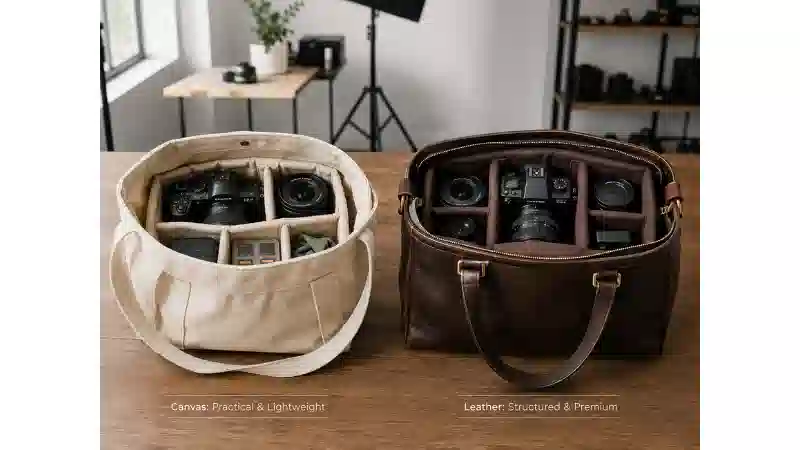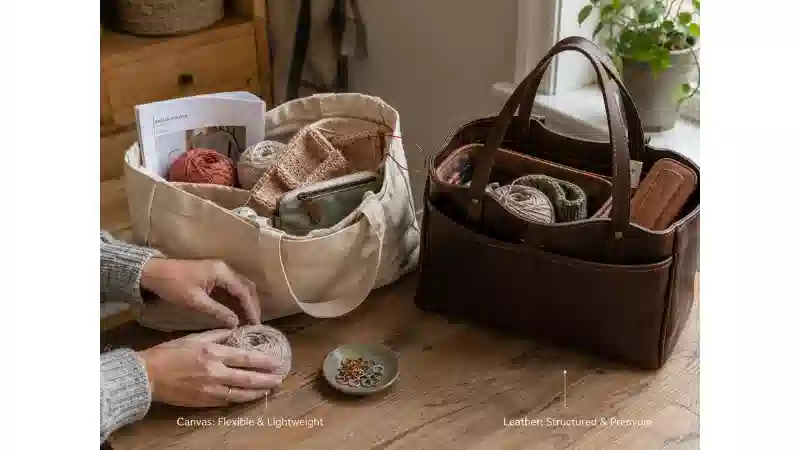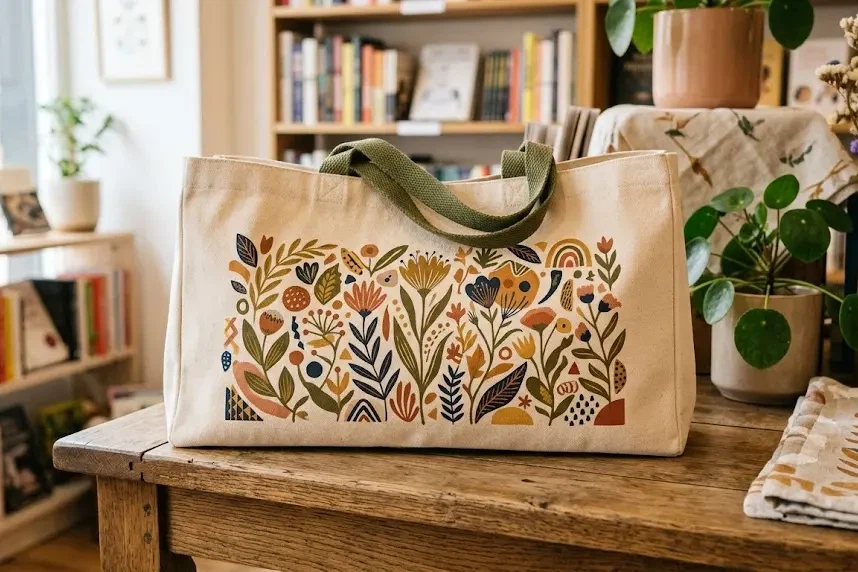
The Four Decisions Behind Every Custom Tote Bag Order
These work as a sequence. Each one narrows your options for the next.
- Material determines how the bag feels, how long it lasts, how well it accepts ink, and whether it supports a sustainability message.
- Structure - size and whether the bag has a gusset - determines capacity and carrying comfort.
- Print method determines color range, detail level, minimum order quantities, and washability after repeated use.
- Quantity and budget - unit price drops sharply with volume, and getting the quantity tier right matters as much as getting the design right.
Choosing the Right Material
This is the question most buyers skip over, and it has the biggest impact on the final result. Here is how the main options actually compare.
Cotton Canvas
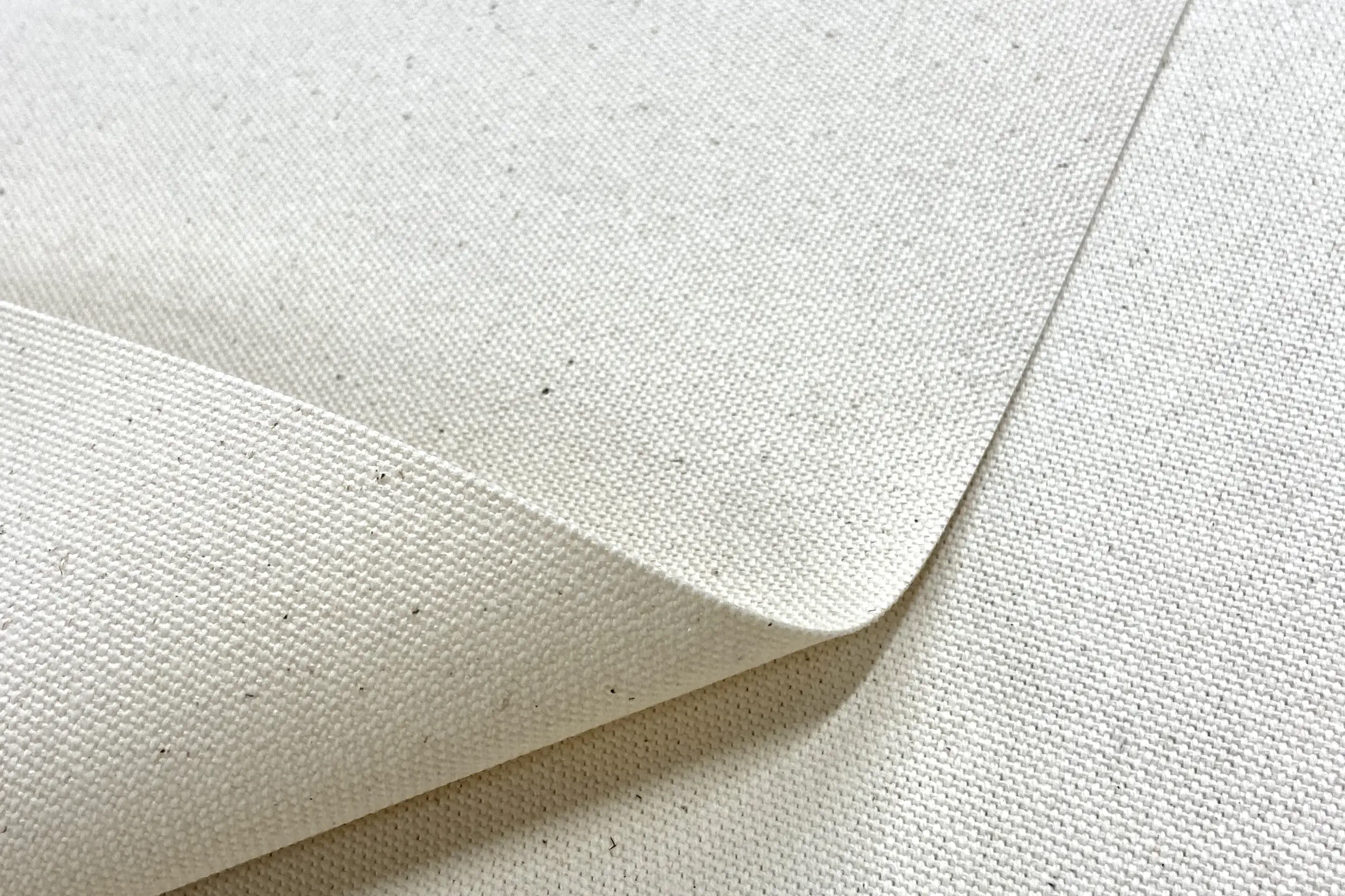
Cotton canvas is the standard material for most custom cotton shopping bags, and it earns that position. It is durable, machine-washable, and takes printed designs cleanly. Weight matters here. At 10 oz, the fabric folds flat easily and works well for light-load handout bags. At 12 oz, it holds its shape, absorbs ink well, and survives regular use without significant print fade - this is the weight most buyers end up choosing. At 16 oz, you get noticeably more structure and heft, which suits premium retail or boat-tote styles, though it adds cost and shipping weight.
In practice, the jump from 10 oz to 12 oz is worth making for any bag intended for regular use. A 10 oz bag starts to look tired after a season of daily carry; the 12 oz holds up considerably better. If you want a deeper look at how cotton canvas compares to similar fabrics, this article on the material differences between cotton tote bags and canvas tote bags covers the specs in detail.
Non-Woven Polypropylene
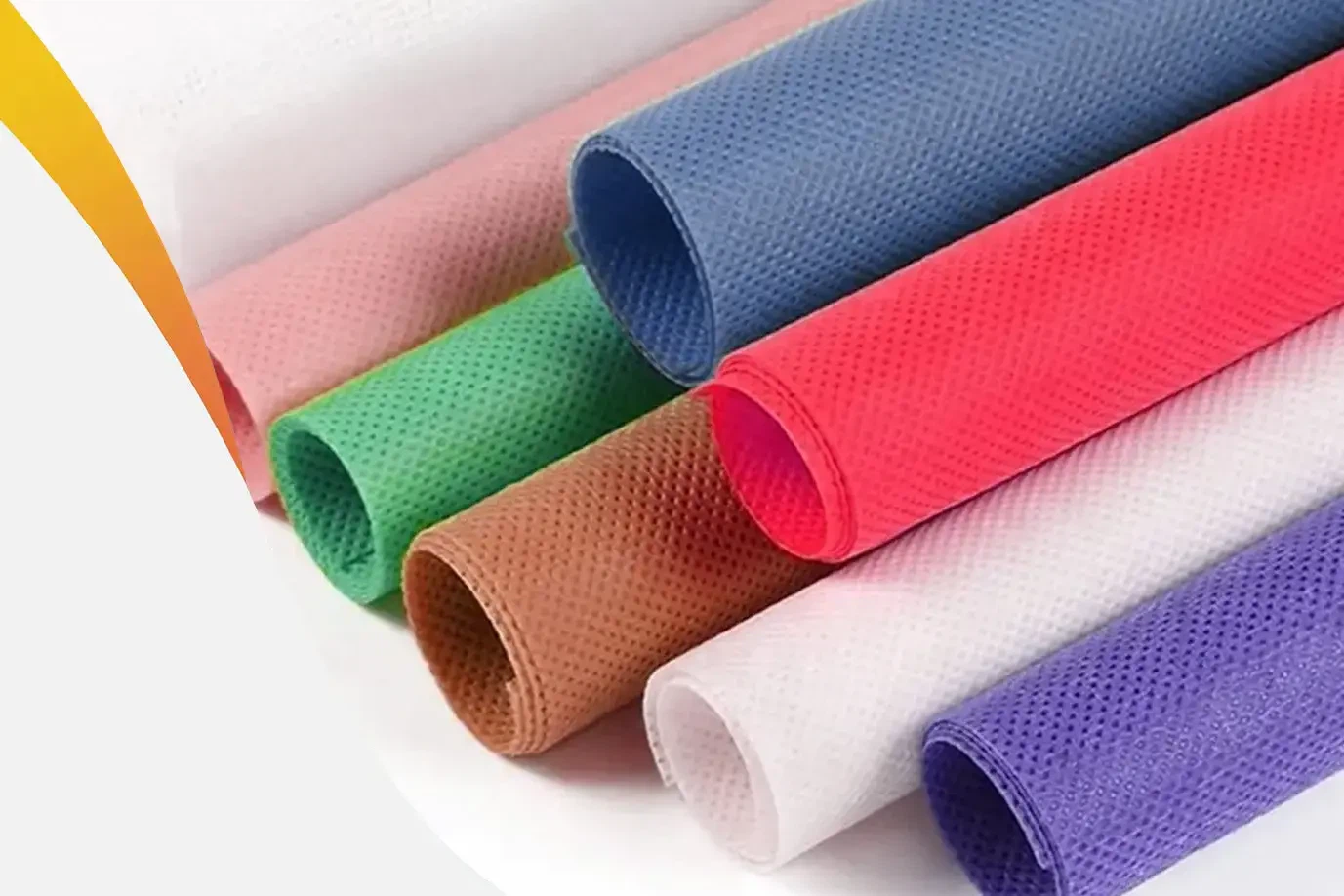
Non-woven PP bags are the light, slightly crinkly bags you see at grocery store checkouts and trade show floors. They are the lowest-cost option and the easiest to ship in bulk - both of which matter when you are moving several hundred units to an event. You can browse available configurations in the non-woven shopping bag range.
The honest assessment: non-woven PP does not communicate quality. For a high-volume event giveaway where the bag is mainly a vehicle for a flyer and a branded pen, it does the job. If you want the bag in daily use and associated with your brand positively over time, this material sends the wrong signal. It is also worth knowing that non-woven PP has a more complicated eco story than it first appears - relevant if sustainability is any part of your brief.
Recycled and Organic Materials
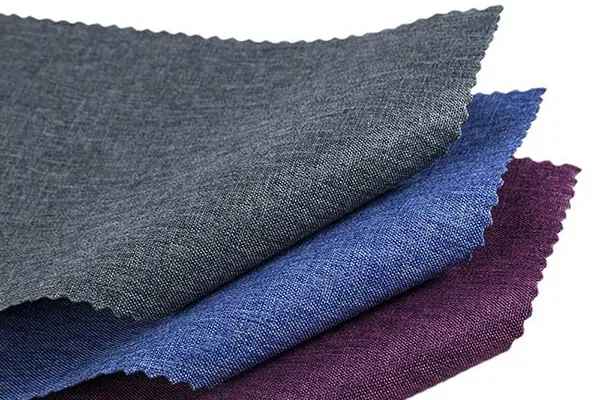
rPET - fabric made from recycled plastic bottles - has a smooth, slightly synthetic feel, prints cleanly, and gives you a verifiable recycled content claim. 100% rPET shopping bags are now available at competitive price points and have become a practical choice for brands with ESG commitments, because the story is concrete: a specific number of bottles diverted per bag produced.
Organic cotton, ideally with GOTS certification, performs almost identically to conventional canvas but supports specific environmental claims. Expect a modest cost premium. For a full comparison of sustainability trade-offs across materials - including lifecycle considerations - this guide to bag material sustainability covers the detail you need before making a sourcing decision.
| Material | Feel | Durability | Print Quality | Eco Position | Typical Use |
|---|---|---|---|---|---|
| Cotton Canvas (12 oz) | Soft, natural | High | Excellent | Standard | Most branded bags, retail, events |
| Non-Woven PP | Crinkly, light | Low–Medium | Good | Low | High-volume giveaways, tight budgets |
| rPET | Smooth, synthetic | High | Excellent | High (recycled content) | ESG campaigns, branded retail |
| Organic Cotton | Soft, natural | High | Excellent | High (certified) | Premium gifting, ethical brands |
For a direct side-by-side comparison of rPET, non-woven, and cotton across both sustainability and practical performance metrics, this rPET vs non-woven vs cotton comparison goes into the numbers.
Size and Structure: Getting the Fit Right
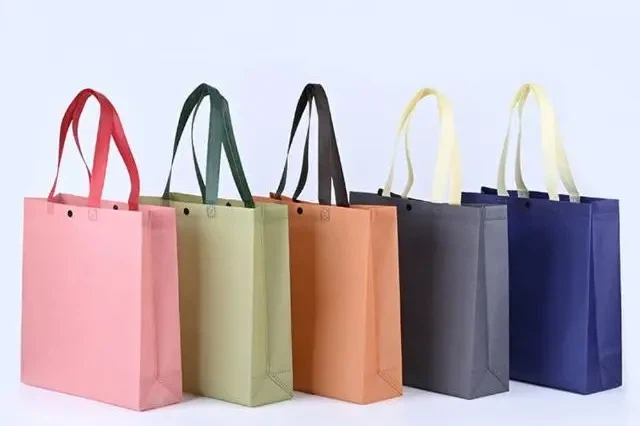
A small bag (around 12" × 12") fits a paperback, a few folded flyers, or a light personal item. A standard bag (14–16" × 14–16") is the most versatile size - it handles a day's worth of groceries, a laptop sleeve, or a set of conference materials without looking strained. A large or jumbo bag (18–20" wide) is the right call when people need to carry multiple or bulkier items.
The gusset question matters more than most buyers realize. A flat tote strains at the seams when loaded with boxy items; a gusseted bag - one with extra fabric panels on the sides or base - expands properly and distributes the load. The trade-off is that gusset panels reduce the flat print area on the front and back, so keep artwork within the flat panel zone and away from seam lines.
Handle drop also determines whether a bag actually gets used. An 8–10" drop suits hand carry for short distances. A 12–14" drop allows over-the-shoulder carry, which makes a real difference for bags people wear all day at conferences or markets. It is a spec detail that rarely appears prominently in product listings but consistently affects whether a bag becomes a daily item or sits in a drawer.
Printing Methods: What Actually Works on Fabric
Print method affects what designs are feasible, what minimum quantities are required, and how the result holds up over time. A detailed overview of six printing methods used on tote bags is available in this printing methods guide. Here is the practical summary.
Screen printing is the standard choice for orders of 50 or more units with bold logos and 1–4 solid colors. Each color requires a separate screen, making it expensive for complex multicolor artwork but very cost-effective at scale. Durability is excellent - screen-printed designs hold up well through repeated washing when applied correctly.
Heat transfer printing suits shorter runs and designs with gradients or many colors. On smooth cotton canvas it looks clean; on more textured surfaces the transfer edge can occasionally be faintly visible.
DTG (direct-to-garment) printing handles full-color images and photographs without the color-count constraints of screen printing. It works best on smooth, light-colored cotton, and is generally better suited to smaller runs than high-volume orders.
Embroidery produces a raised, textured finish that communicates quality in a way printed methods cannot. It suits corporate gifts and premium retail merchandise well, but is not appropriate for photographic artwork, gradients, or fine text below about 8pt at print scale.
Sublimation allows seamless edge-to-edge full-coverage printing. One firm constraint: it only works on synthetic (typically polyester) fabrics. Cotton canvas and natural materials are not compatible with this method.
| Method | Color Flexibility | Min. Order | Wash Durability | Best Fit |
|---|---|---|---|---|
| Screen Printing | 1–6 colors | 50–100 | Excellent | Bold logos, large volume |
| Heat Transfer | Unlimited | 1–25 | Good | Short runs, gradients |
| DTG | Unlimited | 1–25 | Good–Excellent | Photos, complex artwork |
| Embroidery | Limited (thread colors) | 12–24 | Excellent | Premium gifts, corporate |
| Sublimation | Unlimited | 1–50 | Excellent | All-over print, polyester only |
What Custom Tote Bags Actually Cost
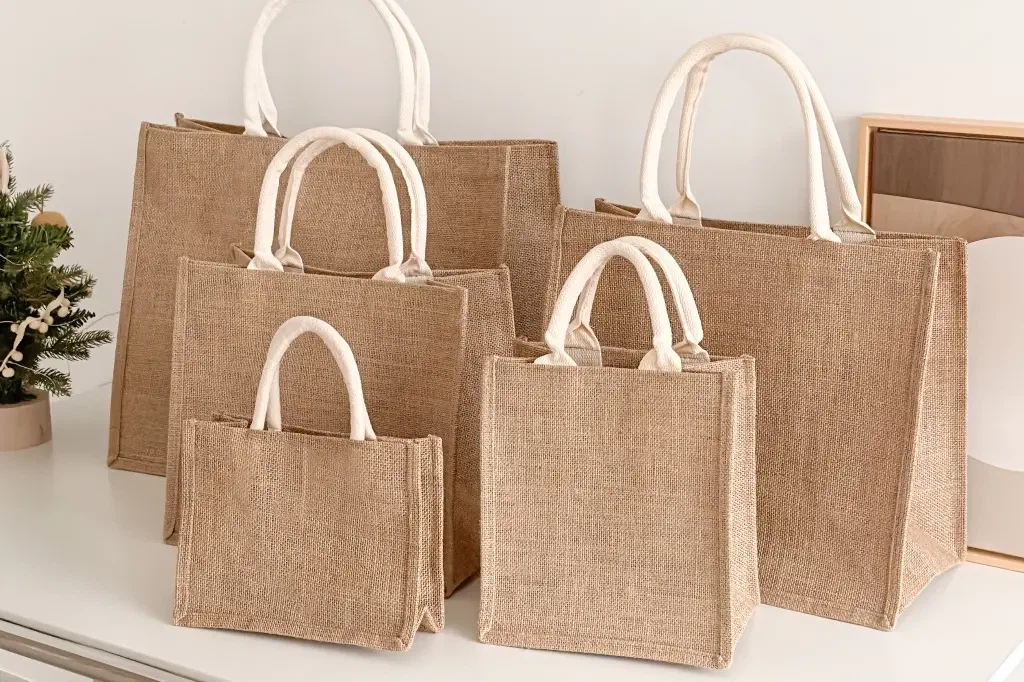
Most buyer guides skip this topic. The ranges below are based on typical wholesale market pricing for a standard 12 oz cotton canvas tote with a single-color screen print on one side. Actual quotes vary by supplier, material specification, and order complexity - treat these as planning baselines.
| Quantity | Approximate Unit Price |
|---|---|
| 25–50 units | $6–$12 |
| 100 units | $4–$8 |
| 250 units | $3–$6 |
| 500+ units | $2–$4.50 |
The per-unit cost drops steeply between 50 and 250 units. In many cases, ordering 250 instead of 150 costs only marginally more in total but lands in a meaningfully better price tier. Worth running the numbers before finalizing quantity. Additional costs that catch buyers off guard: each extra print color adds a screen setup fee; two-sided printing typically adds 30–60% to print cost; organic or rPET materials add roughly $1–$3 per unit over standard canvas; and rush production adds 20–50% to the total bill. This breakdown of hidden costs in cheap bag orders is worth reading before committing to the lowest quote you receive. For guidance on MOQ tiers and what they mean for lead time, this MOQ and lead time guide covers the variables in detail.
Design Rules That Prevent Costly Reprints
These are not aesthetic guidelines. They are the practical rules that determine whether what you approve on screen actually prints cleanly on fabric.
Get the print dimensions before finalizing artwork. Confirm the exact printable area for your specific bag and structure from your supplier. A design that looks perfectly centered on a flat bag template can land partly on a gusset seam on a structured bag. Seam placement varies by manufacturer and bag style.
Keep line strokes above 0.5pt and text above 8pt at actual print size. Anything thinner risks disappearing in fabric texture during screen printing or blurring in DTG. A useful check: print your artwork at 100% scale and hold it at arm's length. If you are squinting to read the secondary text, it will not survive the print process cleanly.
Submit vector files. Adobe Illustrator (.ai), .svg, .eps, or PDF with outlined fonts allow suppliers to scale artwork without any quality loss. Raster files (PNG, JPEG) require 300 DPI at the actual intended print dimensions - not screen preview size. A logo that is 300 DPI at business-card size is well below 300 DPI at tote-bag print scale.
Prioritize contrast over clever color choices. A medium-gray logo on natural canvas looks refined in a digital mockup and reads poorly in real-world lighting. Dark ink on light fabric, or light ink on dark fabric, is the most reliable approach for designs that need to be seen across a room or photographed.
The five mistakes responsible for most reprints: design placed over gusset seams; low-contrast color combinations approved only in a screen preview; raster files submitted at screen resolution; text legible only when zoomed in but not at print scale; and artwork approved from a digital mockup without confirming the actual print area dimensions.
Matching the Bag to the Job
For high-volume trade show and event giveaways, the priorities are cost efficiency, fast logistics, and logo visibility at a distance. A standard flat or lightly gusseted cotton canvas tote with a bold one- or two-color screen print, ordered 15–20% above expected attendance, covers most scenarios. For more detail on event-specific planning, this guide on customizable swag bag giveaways covers the practical questions.
For retail merchandise and brand gifting, quality and aesthetics become the priority - these bags need to photograph well and hold up through daily use. Buyers sourcing cotton tote bags at wholesale scale will find this wholesale buyer's guide for cotton shopping bags a useful starting point.
For small-batch personal orders or gifts under 25 units, screen printing economics do not make sense. DTG and heat transfer are the practical options, with many suppliers now offering single-unit production. The material and design rules above still apply; only the minimum quantity threshold changes.
| Use Case | Material | Structure | Print Method |
|---|---|---|---|
| Trade show giveaway | Cotton canvas or non-woven PP | Flat or light gusset | Screen print |
| Retail merchandise | 12–16 oz cotton canvas | Structured with gusset | Screen print or embroidery |
| Corporate gift | 12 oz cotton or rPET | Standard with pocket | Screen print or embroidery |
| Small-batch / personal | Cotton canvas | Standard | DTG or heat transfer |
| Eco-campaign | Organic cotton or rPET | Any | Screen print or DTG |
Before You Order: A Six-Point Checklist
- Confirm bag specs - material weight, size, structure (flat or gusseted), handle drop length, and any additional features such as interior pockets or zip closures.
- Lock in quantity with a buffer - add 15–20% above your expected need to cover staff, replacements, and walk-up demand at events.
- Prepare artwork in the correct format - vector preferred; raster only at 300 DPI at actual print dimensions; all fonts outlined or embedded.
- Specify print method and placement - which face, exact positioning, and any PMS color matching requirements.
- Request a proof before production runs - a digital proof is the minimum; a physical proof is worth the cost for orders above 100 units.
- Confirm lead time against your event date - standard production typically takes 7–14 business days plus shipping. Build in a buffer.
If you are sourcing at volume or need custom specifications, our OEM production service covers what is possible on bespoke orders. To discuss your specific requirements, send us a sourcing inquiry and we will respond with options matched to your brief.
Frequently Asked Questions
What is the best material for custom tote bags?
For most applications, 12 oz cotton canvas is the most practical all-round choice - durable, washable, and reliable to print on. If your brand has specific sustainability requirements, organic cotton (GOTS-certified) or rPET offer stronger environmental credentials. The right material depends on how the bag will actually be used and what it needs to communicate about your brand.
What is the difference between a cotton tote bag and a canvas tote bag?
Canvas is typically a tightly woven, heavier cotton fabric - so most canvas tote bags are also cotton. The label alone is not the most useful spec. Weight in ounces per square yard tells you more: 12 oz and above behaves like what most people picture when they say canvas, while lighter weights (8–10 oz) are softer and more pliable. See the full material breakdown in this comparison of cotton and canvas tote bag materials.
How much do custom tote bags cost per unit?
A standard 12 oz cotton canvas tote with a single-color screen print runs roughly $6–$12 per unit at 25–50 pieces, $4–$8 at 100 pieces, and $2–$4.50 at 500 or more. Premium materials, additional print colors, embroidery, and rush production each increase the base cost. Always request a specific quote - these are reference ranges, not fixed prices.
Are printed tote bags machine-washable?
Cotton canvas bags can generally be washed on a gentle cycle in cold water. Screen-printed and embroidered designs hold up well through repeated washing. DTG and heat transfer prints are more sensitive to heat and agitation - cold water and air drying significantly extend their lifespan. Check the care guidance from your supplier for the specific print method used, since durability varies by application quality.
What file format should I send for custom tote bag printing?
Vector files - .ai, .svg, .eps, or PDF with outlined fonts - are the standard requirement for good reason: they scale to any print size without any quality loss. If you only have a JPEG or PNG, it needs to be at 300 DPI at the actual intended print dimensions, not the screen display size. When in doubt, send the file to your supplier for a pre-production review before the job runs. Catching a resolution issue before production is free; after is not.
What is the minimum order quantity for custom tote bags?
It depends on the print method. Screen printing typically starts to make economic sense at 50–100 units, because setup costs are divided across the run. DTG and heat transfer have no practical minimum - many suppliers offer single-unit production through print-on-demand. If you need fewer than 25 bags, these are the methods to look for. For more on how MOQ affects pricing and lead time, this MOQ guide explains the mechanics.