This guide breaks down what canvas weight really means, how the common ranges from 4 oz to 20 oz compare, and how to match the right weight to what you're actually going to carry, print, or sell.

What Does "Oz" Actually Mean on a Canvas Bag?
The oz figure refers to ounces per square yard, the weight of one square yard of fabric, not the finished bag. It's a density measurement, defined under methods such as ASTM International's standard for measuring fabric mass per unit area.
More fiber packed into the same square yard means a higher number, a stiffer hand-feel, and generally more resistance to tearing. For a closer look at canvas construction, our guide to canvas fabric types and weights covers the material side in more depth.
Why This Number Gets Misread
Because the unit gets shortened to just "oz" in casual listings, people often assume a "12 oz tote" weighs 12 ounces total. It doesn't. A large 12 oz tote, once you add handles, stitching, and a reinforced base, will usually weigh closer to a pound once finished.
The oz rating describes the density of the fabric, not the weight of the finished bag.
Weave Type Changes the Story, Even at the Same Weight
Weight is only half of what determines how a canvas bag performs. Two fabrics rated at the same 10 oz can behave differently depending on how the yarns are woven. Plain-weave canvas has a smoother surface that's friendlier to printing, while duck canvas, woven more tightly with thicker yarns, trades some of that smoothness for added abrasion resistance, which is common in work bags and outdoor gear.
If you're comparing quotes from two suppliers offering the "same" weight, it's worth asking about the weave too. Our breakdown of how cotton canvas and cotton twill differ is a useful next read if construction matters as much as the ounce rating on your spec sheet.
Converting Oz to GSM for International Sourcing
Outside the US, fabric weight is usually quoted in GSM, grams per square meter, so sourcing from suppliers in Europe or Asia means converting. The formula is simple: multiply the oz figure by 33.91 to get the GSM equivalent.
Here's how the most common canvas weights line up:
- 4 oz ≈ 136 gsm
- 6 oz ≈ 203 gsm
- 8 oz ≈ 271 gsm
- 10 oz ≈ 339 gsm
- 12 oz ≈ 407 gsm
- 16 oz ≈ 543 gsm
- 20 oz ≈ 678 gsm
Keep this conversion handy when comparing a GSM spec sheet against a domestic quote given in oz. They describe the same thing in two different systems.

Canvas Weight at a Glance: 4 oz to 20 oz
Canvas for bags typically runs from 4 oz to 20 oz, and each step up changes how the fabric feels, folds, and holds up over time.
- 4–5 oz – soft and almost shirt-like; folds into almost nothing, but suited only to very light contents.
- 6 oz – the standard for giveaways and reusable shopping bags; light enough to fold flat, sturdy enough for everyday errands.
- 8 oz – noticeably more structured while still easy to carry; a solid middle ground for daily use.
- 10 oz – holds its shape under a real load and takes printing or embroidery cleanly; the most commonly requested weight for retail and branded totes.
- 12 oz – stands upright even empty, with a substantial, premium feel suited to laptop bags and corporate gifts.
- 14–16 oz – rigid and heavy-duty, built for sustained daily loads rather than occasional use.
- 18–20 oz – industrial-grade thickness, reserved for specialty applications rather than everyday totes.
If you're browsing ready-made cotton shopping bags across these weights, 8–10 oz is usually the easiest starting point. It suits the widest range of uses without over- or under-building the bag.
Matching Canvas Weight to How You'll Use the Bag
The most useful way to choose a weight isn't to start with a number. It's to start with what the bag actually needs to survive.
Light and Packable: 4–6 oz
This range works best when portability and unit cost matter more than heavy-duty strength. Folding small enough for a glove box or purse makes it a common choice for event giveaways and promotional swag, and the trade-off shows up mainly under sustained heavy loads, where handle-base stitching is usually the first point of failure. If the bag will regularly carry more than a light grocery run, this isn't the weight to choose.
The Everyday Sweet Spot: 8–10 oz
Most tote bags people actually use day to day fall in this range. The fabric holds its shape under a partial load, stays light enough to avoid noticeable bulk, and is stable enough for screen printing or embroidered logos without surface puckering. For a commuter bag, market tote, or mid-range branded giveaway meant to last months rather than days, 8–10 oz is usually the safest default, and it's the weight worth sampling first if you're unsure.
Built to Last: 12–16 oz
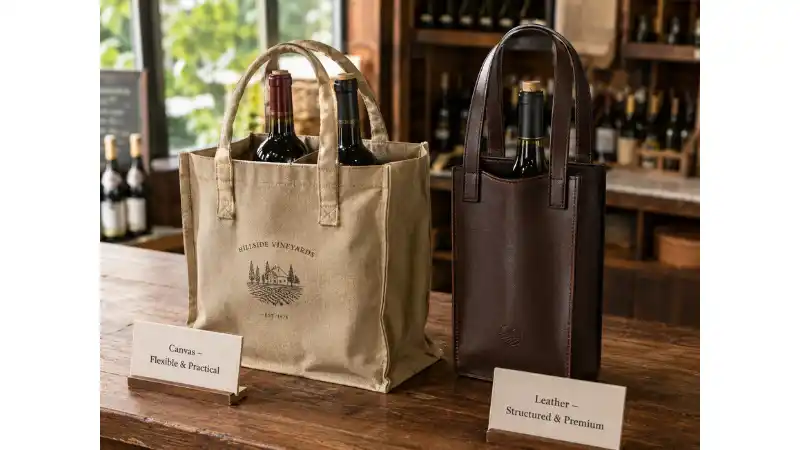
Above 12 oz, a canvas bag stands up on its own, resists sagging under a laptop or stack of books, and reads as noticeably more premium, which is part of why this range is common in canvas duffel and weekend bags as well as boutique retail packaging. The trade-off is extra weight carried even when the bag is empty. It's also sturdy enough to double as something else: a heavier-canvas insulated cooler bag holds its shape well enough to carry bottles without the sides collapsing.
Specialty Use Only: 18 oz and Above
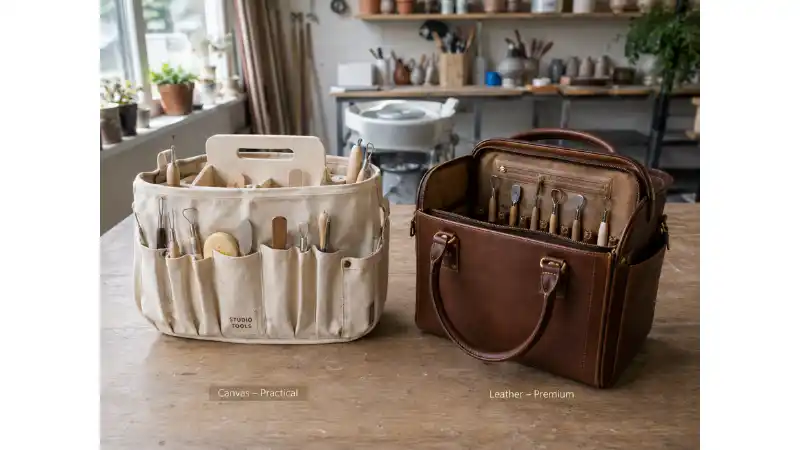
Past 16 oz, canvas moves out of everyday tote territory into tool bags, portfolio cases, and similar gear where puncture resistance matters more than carry comfort. Outside that category, the added weight is mostly cost without a matching benefit.
Which Printing Method Fits Your Canvas Weight?
Canvas weight also decides how well a design holds up once it's printed or stitched. A quick way to think about it by method:
- Screen printing performs most consistently on 6–12 oz canvas, smooth enough for ink to lay flat and flexible enough to feed evenly through equipment.
- DTG (direct-to-garment) printing does best on lighter, higher-cotton canvas around 6–10 oz, where ink absorbs cleanly into the fiber.
- Embroidery holds up best on 10–14 oz canvas; lighter weights can pucker under dense stitching.
- Heat transfer and vinyl bond cleanly across 6–16 oz, with 8–12 oz usually giving the most reliable result.
If you already know your decoration method, let that decide the fabric weight first, not the other way around. Our overview of tote bag printing methods goes further into how each technique interacts with fabric, and you can see screen-printed canvas bags for reference.

Can You Machine Wash a Canvas Tote Bag?
Yes, but the right approach depends on the weight. Lighter canvas, in the 4–8 oz range, shrinks more noticeably on its first wash because there's less fiber holding the weave's shape under heat and agitation. If a bag in this weight will be printed or embroidered, washing it once before decoration, not after, avoids a design that no longer lines up with the seams once the fabric settles.
Heavier canvas, 10 oz and up, holds its shape and color through far more wash cycles but takes longer to dry, so air drying is worth the extra time to preserve shape and print quality. Across all weights, cold water and a gentle cycle are the safer default; hot water and high heat are what actually cause shrinkage and fading, not the washing itself.
One detail that's easy to miss: canvas picks up visible dirt faster on lighter, more porous weaves than on denser ones, simply because the looser weave catches more surface dust and grime. Worth factoring in if the bag will see daily outdoor use.
Mistakes Worth Avoiding When Choosing Canvas Weight
The most common mistake is assuming heavier always means better. For a high-volume giveaway, a 12 oz bag adds cost and bulk without any benefit the audience will actually notice. The right weight is the one that matches the use, not the highest number on the list.
Construction quality gets overlooked just as often. A well-made 8 oz bag with reinforced handles and a solid base will outlast a poorly stitched 12 oz one, since the ounce rating alone doesn't guarantee durability. Ask about this when comparing quotes from wholesale suppliers, as two bags at the same listed weight can come from very different production standards.
It also helps to settle on weight with your decoration method already in mind. Choosing 6 oz canvas for a heavily embroidered logo, for example, sets up puckering issues that cost far more to fix after the run than to avoid beforehand. For a custom or bulk order, our custom production team can offer a second opinion before you commit.
FAQ
Q: What does "oz" mean on a canvas tote bag?
A: It's short for ounces per square yard, how much one square yard of the fabric weighs. It tells you how dense the weave is, not how much the finished bag weighs.
Q: What's the difference between 6 oz and 12 oz canvas?
A: 6 oz canvas is light and foldable, suited to giveaways and light grocery use. 12 oz is roughly twice as dense: it stands upright on its own, handles heavier loads, and takes embroidery more cleanly, at a higher weight and price.
Q: Is canvas weight the same thing as GSM?
A: They measure the same property in different units. Oz is ounces per square yard, used mainly in the US; GSM is grams per square meter, used almost everywhere else. Multiply oz by 33.91 to convert to GSM.
Q: Does canvas weight affect the cost of a bulk order?
A: Yes. Heavier canvas uses more raw cotton per unit, so cost per bag rises with weight. For large campaigns on a tight budget, a lighter weight is a reasonable cost decision rather than a quality compromise. Our guide to MOQ, lead time, and cost covers this in more detail.
Q: Can a heavy canvas tote go in the washing machine?
A: Yes, with cold water, a gentle cycle, and air drying afterward. Hot water and tumble drying are what cause shrinkage and fading, not machine washing itself.
Bringing It Together
There's no single best canvas weight, only the one that matches what the bag needs to do. As a rough default, 8–10 oz covers the widest range of everyday uses, from commuting to mid-range branded merchandise, while anything above 12 oz earns its extra cost mainly when durability or a premium feel matters more than portability.
If you're placing a bulk order, request a sample at your intended weight before committing to a full run, especially if embroidery or a specific print method is involved. Reach out to our team for help matching a weight to your project before you order.