This guide covers every technical decision that actually matters when placing a bulk order of 10 to 500 pieces: fabric weight, color, size, print method, minimums, and timing. If you've ordered before and hit a snag, or if this is your first time, the same checklist applies.

Step 1: Choose the Right Canvas Weight
Canvas weight is measured in ounces per square yard (oz) - a density measurement, not the total weight of the finished bag. The higher the number, the thicker and more structured the fabric. According to ASTM International textile standards, this measurement is the reliable benchmark for comparing fabric strength across suppliers.
For a deeper look at how canvas differs from other natural fabrics, canvas fabric types and weights covers the material science in more detail.
4–8 oz (lightweight): Thin, foldable, and cost-effective. Works for high-volume promotional giveaways where the bag's job is short-term. Feels insubstantial in hand - not suitable if recipients are expected to reuse it.
10–12 oz (mid-weight): The range most buyers settle on after holding a sample. Holds its shape, handles everyday loads without sagging, and takes ink well across all major print methods. The 10 oz weight is the most widely stocked option across suppliers, making it the default for most commercial bulk orders.
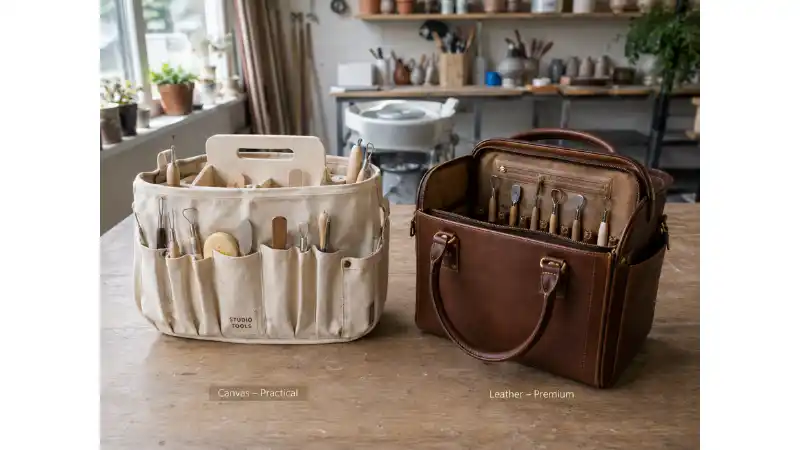
14 oz and above (heavy-duty): Built for durability over aesthetics. Better suited to utility contexts - tool carrying, farmers markets, or bags that will be loaded and unloaded repeatedly. Heavier canvas can be more difficult to print on; confirm compatibility with your supplier before committing.
Canvas Weight Reference: oz and GSM
Many suppliers - especially those manufacturing in Asia - quote fabric weight in GSM (grams per square meter) rather than oz. Here's a practical conversion reference:
| oz per sq yd | Approx. GSM | Typical Use |
|---|---|---|
| 5–6 oz | 170–200 GSM | Lightweight giveaways |
| 8 oz | 270 GSM | Mid-range promotional bags |
| 10 oz | 340 GSM | Standard commercial bulk orders |
| 12 oz | 400 GSM | Retail merchandise, daily use |
| 14–16 oz | 475–540 GSM | Heavy-duty utility bags |
If a supplier quotes GSM without oz, divide by 33.9 to get the approximate oz equivalent. For a side-by-side comparison of canvas constructions, see cotton canvas vs. cotton twill differences.

Step 2: Understand Size and Color Options
Standard canvas tote sizes fall into three practical ranges: small (around 13" × 13"), medium (around 15" × 16"), and large (18" × 20" and above). Medium is the most versatile and widely stocked. If you're ordering for a specific purpose - fitting a product kit, a particular book size, or retail packaging - measure what the bag needs to hold before committing to dimensions.
Gusseted bags (with flat panels on the sides and bottom) expand into a box shape when loaded, which makes them significantly more practical than flat totes for anything beyond light carrying. For orders under 100 pieces, standard sizes are almost always the more practical choice over custom dimensions, which require higher minimums and longer lead times.
On color: Natural (undyed) and black are the most consistently stocked colors across all canvas weights. Navy, forest green, and white are common at mid-weight. Beyond that, availability narrows. If you need a specific color - particularly a brand color - confirm whether it's a stock option or a custom dye lot. Custom colors typically require higher minimums (often 200 pieces or more) and add two to four weeks to the production timeline. For orders under 100 pieces, working within available stock colors is usually the smarter path.

Step 3: Choose the Right Print Method
The print method affects cost, color fidelity, durability, and minimum order requirements. For a full breakdown of how each technique works, how printing methods compare across bag types is worth reading before you finalize your choice.
Screen Printing
Screen printing uses ink applied through stencils directly onto the fabric. It produces sharp, high-contrast results that hold up well through repeated washing - typically the most durable print method available for canvas bags. It works best for designs with four or fewer solid colors; gradients and photographic images don't translate well.
Most suppliers require a minimum of 25 pieces per design because setup costs (producing the screens) are charged per job. One important note: if brand color accuracy matters, provide your color values as a Pantone (PMS) number. Without a Pantone reference, printers match visually to their closest available ink, which can result in visible drift from your brand color - especially noticeable when bags are displayed alongside other branded materials. See our silk-screen cotton shopping bags for examples of what this method produces.
DTG (Direct-to-Garment)
DTG works like an inkjet printer for fabric. It reproduces full-color artwork, photographs, and complex illustrations accurately, with minimums often as low as 10 pieces. This makes it well-suited for smaller runs or designs with more than four colors. The tradeoff is longevity: DTG prints fade faster than screen-printed ones, particularly with frequent or high-heat washing.
Embroidery
Embroidery stitches the design directly into the fabric. The result is textured, durable, and immediately communicates a premium quality level - embroidered logos on canvas bags routinely outlast the bag itself.
Two practical notes buyers often miss: first, embroidery requires digitizing - converting your artwork into a stitch file - which typically costs $25–$75 as a one-time setup fee and may require simplifying fine lines or small text. Second, it works best for bold, simple designs; highly detailed artwork or thin typography doesn't translate well into thread. See embroidery cotton shopping bags for reference on how logos translate to stitch format.
Print Method Quick Reference
| Method | Minimum Qty | Best For | Durability |
|---|---|---|---|
| Screen printing | 25 pieces | Bold logos, 1–4 colors | High |
| DTG | 10 pieces | Full-color, complex artwork | Medium |
| Embroidery | 12–25 pieces | Premium logos, simple designs | Very High |
Step 4: Minimum Order Quantities
For blank (unprinted) canvas bags, most suppliers have no order minimum - volume pricing applies automatically as quantity increases. Once customization is involved, minimums vary by method: 10 pieces for DTG, 25 for screen printing, and 12–25 for embroidery depending on the supplier.
A practical note on multi-design orders: if you're ordering two colorways of the same logo, each counts as a separate screen printing job with its own setup fee. For orders with multiple SKUs, confirm with your supplier how they handle mixed quantities - some apply the minimum per design, others per total order volume. For a full breakdown of how MOQ affects pricing tiers, see our MOQ and lead time guide and MOQ effect in bulk bag production.
Step 5: Plan Your Lead Time Realistically
Blank bags in stock ship within one to three business days. Standard custom orders - in-stock bags with custom printing - take 7–15 business days from artwork approval to shipment. This covers proof review, print production, and quality check; it does not include shipping transit time.
For domestic US suppliers, add three to seven business days for transit. For suppliers manufacturing overseas, factor in four to eight additional weeks for custom production on non-standard specifications.
Work backward from your event date, not forward from today. Subtract shipping time, then production time, then add a buffer of three to five business days for proof revision cycles. Rushing is possible with most suppliers for an additional fee, but it narrows your options and raises costs significantly.

Step 6: Request a Sample Before the Full Order
For any order above 50 pieces with a supplier you haven't used before, a physical sample is worth the cost. Buyers often find that a bag they approved from a product photo feels meaningfully different in hand - lighter than expected, with handles that are narrower or shorter than the spec sheet suggested.
Most suppliers sell single-unit blank samples. Printed samples involve a setup fee, but catching a color mismatch or artwork placement issue at this stage costs a fraction of what it costs after 200 bags are in production. Approve the digital proof carefully, and share it with at least one other person on your team before signing off.
Which Specs Fit Your Situation?
Promotional Event Giveaways (25–200 pieces)
Volume and cost-per-unit matter most here. Choose 6–8 oz canvas in a standard medium size with one- or two-color screen printing. You'll need at least 25 pieces to make screen printing economical. Browse cotton shopping bags for stock options that work well in this range.
Branded Retail Merchandise (25–100 pieces)
Step up to 10–12 oz canvas, which feels more substantial and holds print better. A gusseted bottom makes the bag significantly more practical for shopping or daily use. For heavy-carry retail contexts, a heavy-duty canvas bag construction may be worth considering.
Corporate Gifts (10–50 pieces)
DTG covers you at 10 pieces minimum when quantities are low. At 25 pieces, screen printing gives cleaner results for logo-based designs. For a premium positioning, 10–12 oz canvas with embroidery is the strongest combination - the digitizing fee is a one-time cost that doesn't increase with quantity. Cotton duffel bags are another option worth considering when the gift brief calls for something more functional.
Schools, Nonprofits, and Fundraisers (10–100 pieces)
Budget sensitivity is typically high. An 8–10 oz canvas in a standard size with one-color screen printing at 25 pieces hits the right balance. For quantities under 25, DTG avoids the screen setup cost without sacrificing too much on print quality.
6 Mistakes That Create Real Problems
- Choosing weight based on price alone. The cheapest option is usually the lightest canvas. We've seen buyers receive bags that looked fine in photos but felt disposable in hand - and recipients noticed. Match weight to intended use first, then optimize for cost within that weight range.
- Not providing a Pantone color reference. "Match our blue" without a PMS number leaves the result to the printer's judgment. If your brand color is critical to the order, specify the Pantone code and ask the supplier to confirm they can match it before production begins.
- Underestimating lead time. "Two to three weeks production" doesn't include shipping. Factor both into your planning, and build in buffer for the proof revision cycle. A misjudged timeline on a 200-piece order for a conference is not fixable after the fact. See our guide on managing customizable swag and giveaway orders for timeline planning advice.
- Approving the digital proof too quickly. The proof is your last real chance to catch errors - wrong logo placement, incorrect color, a spelling mistake in artwork text. Review it carefully. Share it with at least one other person before approving.
- Confusing cotton totes with canvas. These terms are often used interchangeably by suppliers, but they describe different products. A cotton tote is typically 3–5 oz - light and foldable. Canvas starts around 6 oz and is significantly more structured. If durability matters, confirm the fabric weight in oz or GSM, not just the material name.
- Forgetting about packaging. For event distribution, how bags are packed matters. Bags individually folded and poly-bagged are ready to hand out. Bags compressed into a single carton by the dozen need to be shaken out and refolded on-site. For orders above 100 pieces, ask about individual packaging - it usually costs a small additional fee but saves real time on the day.
FAQ
What is the minimum order for bulk canvas tote bags?
Blank canvas bags typically have no minimum - you can order a single unit. For custom printing, minimums are generally 10 pieces for DTG, 25 for screen printing, and 12–25 for embroidery. Minimums vary by supplier; always confirm before assuming.
What oz canvas is best for most bulk orders?
10 oz (approximately 340 GSM) is the most practical choice for most commercial bulk orders. It's widely available, prints well, and is durable enough for regular use. For lightweight giveaways, 6–8 oz works. For heavy-duty applications, 12–14 oz offers more structure.
How long does a bulk canvas tote bag order take?
Blank bags ship within one to three business days. Custom-printed orders take 7–15 business days from artwork approval to shipment - not including transit time. Orders with non-standard specifications or custom colors may take four to eight weeks. Confirm the estimated delivery date in writing before placing the order.
What's the difference between a cotton tote bag and a canvas tote bag?
Canvas is a dense, tightly woven fabric - usually cotton-based - that is significantly heavier and more structured than standard cotton. A cotton tote is typically 3–5 oz; canvas starts around 6 oz and goes up to 16 oz or more. For a detailed comparison, see cotton tote bags vs. canvas tote bags.
Are canvas tote bags eco-friendly?
Natural cotton canvas is biodegradable and reusable, which makes it more sustainable than single-use plastic. For a higher sustainability standard, look for GOTS-certified organic cotton or GRS-certified recycled materials. For a breakdown of what certifications actually mean for buyers, see environmental certifications for custom tote bags.
Can I order canvas tote bags in bulk with my logo?
Yes. Screen printing, DTG, and embroidery are all available for bulk canvas orders. The right method depends on your artwork complexity, quantity, and budget. If your logo is a simple wordmark or icon, screen printing at 25 pieces is usually the most cost-effective path. For full-color designs or quantities below 25, DTG is the better fit.
Before You Place Your Order
Run through this before confirming any bulk canvas tote bag order:
- Canvas weight confirmed in oz or GSM - not just "canvas"
- Bag dimensions match the intended use; gusset depth noted if applicable
- Stock color confirmed, or custom color minimums and timeline discussed
- Print method selected and compatible with artwork
- Pantone or CMYK reference provided if brand color accuracy matters
- Artwork submitted at 300 DPI minimum
- Digital proof reviewed by at least two people before approval
- Lead time confirmed in writing, with shipping transit added
- Physical sample reviewed for orders above 50 pieces
- Packaging format confirmed for event or distribution use
Pricing, minimums, and lead times mentioned in this guide reflect general industry norms as of 2025 and may vary by supplier, region, and order volume. Always confirm specifics directly before placing an order.