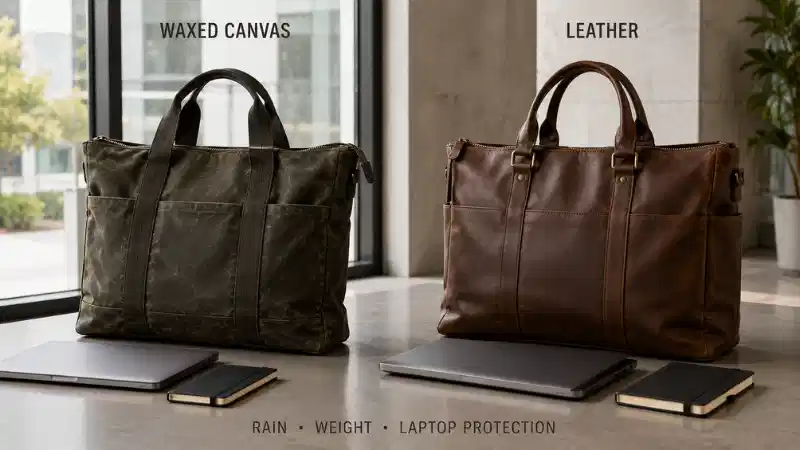
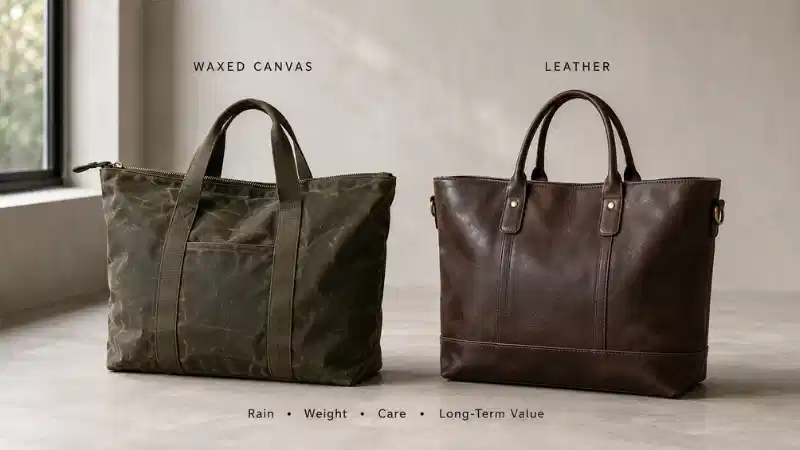
Waxed canvas and leather tote bags can both last for years, but they suit different routines. Waxed canvas is often the more practical choice for rainy commutes, casual travel, and buyers who want a lighter everyday carry tote. Leather usually makes more sense when structure, a formal appearance, and gradual patina matter more than low weight or simple upkeep.
The material name alone, however, is not enough to make a good decision. A zip-top waxed canvas tote with reinforced handles may protect and carry a laptop better than an open-top leather tote, while a lightly built leather bag may weigh less than an overbuilt canvas model. This guide compares the materials, then shows which construction details and supplier specifications should influence your final choice.

Quick Comparison: Waxed Canvas or Leather?
| Decision Factor | Waxed Canvas Tote | Leather Tote |
|---|---|---|
| Typical feel | Flexible, rugged, casual | Structured, refined, formal |
| Empty-bag weight | Often lighter in comparable constructions | Often heavier when thick leather and metal hardware are used |
| Light-rain performance | Good when the wax finish is intact | Depends heavily on leather type and surface finish |
| Routine care | Brush, spot-clean, and rewax worn areas when necessary | Use finish-appropriate cleaning and conditioning methods |
| Appearance over time | Creases, scuffs, tonal variation, and a broken-in look | Softening, color change, surface marks, and possible patina |
| Best fit | Commuting, travel, casual work, and outdoor weekends | Formal offices, client meetings, and premium gifting |
Practical verdict: choose waxed canvas when low weight, weather resistance, and relaxed styling lead your list. Choose leather when formality, structure, and long-term surface character are more important. If machine washing is essential, ordinary washable canvas or another easy-care material may be more suitable than either option.
Start With the Exact Material, Not the Product Label
Canvas is a tightly woven fabric rather than a single fixed specification. Fiber content, weave, fabric weight, finish, lining, and reinforcement all affect performance. A useful starting point is understanding canvas fabric types, weights, and uses before comparing finished bags.
Ordinary Canvas and Waxed Canvas Are Not Interchangeable
Untreated canvas absorbs moisture. Waxed canvas has a water-repellent finish that slows wetting and gives the surface a distinctive creased appearance. The finish can also change the color, hand feel, cleaning method, and compatibility with printing or adhesives.
Do not confuse fiber with fabric construction. A cotton tote can be made from lightweight plain weave, twill, duck canvas, or another construction. The comparison between cotton tote bags and canvas tote bags explains why "cotton" and "canvas" do not describe the same property. Buyers comparing samples should also understand the practical differences between cotton canvas and cotton twill.
"Leather" Also Covers Very Different Products
Full-grain, top-grain, split, bonded, coated, and imitation leather do not age or perform in the same way. In the United States, the Federal Trade Commission Leather Guides address misleading claims about the composition and characteristics of leather and imitation-leather products. A product page that says only "leather" or "genuine leather" still leaves important purchasing questions unanswered.
Ask the supplier for the leather type, thickness, finish, backing, lining, and care instructions. If the appearance of patina is a major reason for buying leather, request a close-up material sample rather than relying on a distant product photograph.
Rain Performance: Water-Repellent Fabric Is Not a Waterproof Bag
Maintained waxed canvas often performs well in light or intermittent rain because droplets bead on the surface instead of immediately soaking into the fibers. That does not make the complete tote waterproof. Water can still enter through an open top, unsealed seams, stitching holes, zipper tape, worn folds, or a saturated bottom panel.
The distinction matters because fabric testing and finished-bag testing answer different questions. The AATCC explanation of water-repellency testing describes a method used to evaluate how textile fabric resists surface wetting. A fabric result alone does not establish that a finished tote will protect electronics during prolonged rain.

What to Inspect on a Rain-Ready Tote
- Top closure: a zipper or covered closure protects better than a fully open top.
- Seams: closely stitched or protected seams reduce obvious entry points, although ordinary sewing is not seam sealing.
- Lining: a water-resistant lining adds time before moisture reaches the contents.
- Bottom construction: reinforcement and feet can keep the bag away from damp floors.
- High-wear areas: corners, folds, handles, and the base may lose wax faster than flat panels.
For more detailed care options, see the guide to protecting a cotton bag from moisture and wear. Buyers concerned about stains as well as rain can also review whether canvas bags get dirty easily and how finish, color, and use affect visible soil.
What Happens When Leather Gets Wet?
A finished leather tote may tolerate brief contact with light moisture, but prolonged wetting can change color, texture, softness, and shape. Blot moisture instead of rubbing it across the surface, reshape the bag, and let it dry naturally away from direct heat. The bag maker's care instructions should take priority because cleaning and conditioning methods vary with tanning and finish.
The Canadian Conservation Institute's leather care guidance demonstrates why leather treatment must be selected for the particular material rather than applied as a universal routine. Test any cleaner or conditioner on a hidden area first.
Construction Can Matter More Than the Exterior Material
A material comparison becomes misleading when bag construction is ignored. For a daily work tote, the following details may influence comfort and durability more than the difference between waxed canvas and leather:
- Handle attachment: handles stitched into a reinforced panel spread the load better than handles attached to a small unsupported area.
- Load-bearing stitching: box-and-cross stitching, bar tacks, or appropriate reinforcement can reduce stress at attachment points.
- Base design: a structured or reinforced bottom helps the bag stand and protects high-wear areas.
- Hardware: large metal fittings add weight; weak hardware can shorten the useful life of an otherwise durable bag.
- Lining: a lining protects the interior but also changes weight, cleaning difficulty, and moisture behavior.
- Closure: a zipper improves security and weather protection, while an open top improves access.
When comparing two products, try to match capacity, closure, lining, handle design, and hardware. Comparing a minimalist canvas tote with a fully lined, metal-trimmed leather tote does not reveal the effect of material alone.

Weight and Carrying Comfort
Comparable structured leather totes are often heavier than similarly sized waxed canvas totes, particularly when they use thick hides, rigid panels, substantial lining, and metal hardware. The difference becomes more noticeable after adding a laptop, charger, notebook, water bottle, and other daily items.
Empty weight is only one part of comfort. Check:
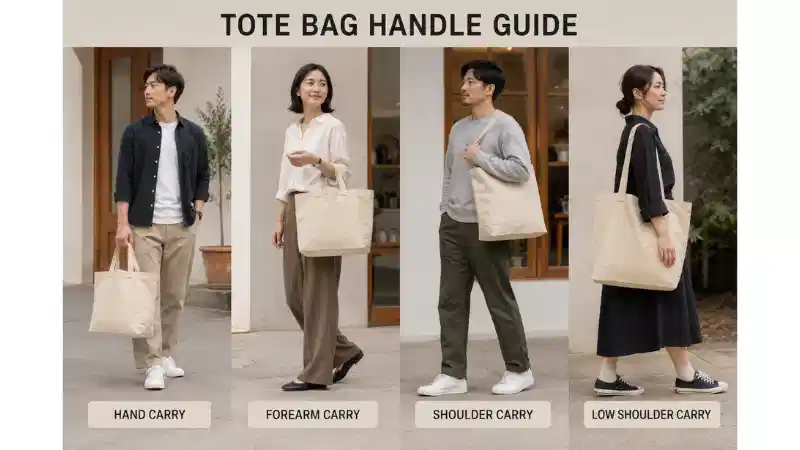
- handle drop and whether the tote fits over a coat;
- handle width and edge finishing;
- bag depth and how far the load sits from the body;
- balance when a laptop is placed in the internal sleeve;
- reinforcement where the handles meet the body;
- whether the opening and hardware press against the arm.
For everyday shopping loads, a simple design from the cotton shopping bag range illustrates how low hardware weight can keep a tote easy to carry. Travel use may require different features, such as a zipper, pockets, or luggage attachment; those needs are better represented by cotton travel bag constructions. Buyers carrying heavier weekend loads should compare tote designs with the reinforced structures used in cotton canvas duffel bags.
How Waxed Canvas and Leather Age
Waxed Canvas
Waxed canvas develops fold lines, lighter and darker areas, scuffs, and softened high-contact points. Rewaxing can restore water beading and darken dry-looking areas, but it will not return the bag to a perfectly uniform factory finish. Buyers who enjoy heritage or outdoor styling often see these changes as character; buyers who want a permanently even surface may not.
Leather
Appropriate leather can soften and develop tonal variation through light, handling, and use. Heavily coated, bonded, or imitation materials may age differently and can crack, peel, or separate instead of developing the patina associated with some natural leathers.
Inspect the corners, handle bases, opening, and bottom panel when evaluating an older sample. Those areas usually reveal how the construction and finish respond to repeated handling.

Cleaning and Maintenance
Routine Care for Waxed Canvas
- Empty the tote and shake out loose debris.
- Use a soft brush on dry surface dirt.
- Spot-clean with a slightly damp cloth when the manufacturer permits it.
- Let the bag dry naturally before storage.
- Rewax worn areas when water no longer beads or the finish becomes visibly uneven.
Avoid ordinary machine washing unless the maker specifically approves it. Detergent, heat, and agitation can remove or redistribute the wax. Rewaxing may darken the material and may affect nearby decoration, so test a hidden area and keep wax away from printed or bonded graphics unless compatibility has been confirmed.
Routine Care for Leather
- Remove dust with a soft, dry cloth.
- Blot moisture promptly without aggressive rubbing.
- Allow the tote to dry naturally away from radiators, hair dryers, and direct heat.
- Use only cleaners and conditioners intended for the exact leather finish.
- Store the tote dry, lightly supported, and away from crushing pressure.
More conditioner is not automatically better. Excess product may darken the surface, attract soil, or interfere with the finish. Always follow product-specific instructions.
Best Material by Use Case
| Use Case | Better Starting Point | What to Check |
|---|---|---|
| Rainy commute | Waxed canvas | Zip top, protected seams, reinforced base, water-resistant lining |
| Formal office or client meetings | Leather | Structured body, comfortable handles, restrained hardware |
| Creative workplace | Waxed canvas | Dark color, structured base, laptop compartment |
| Air or train travel | Waxed canvas | Low empty weight, secure closure, luggage sleeve, flexible body |
| Executive or milestone gift | Leather | Verified leather type, subtle branding, packaging, physical sample |
| Outdoor weekend use | Waxed canvas | Reinforced corners, easy-access pockets, maintainable wax finish |
These are starting points rather than universal rules. A poorly constructed waxed canvas tote will not outperform a well-designed leather tote simply because it is waxed, and a heavy leather bag may be unsuitable for a long walking commute even when it looks appropriate in an office.
Long-Term Value: Use Cost per Carry, Not Price Alone
Leather often has a higher purchase price, but the lower-priced bag is not automatically the better value. A useful comparison is:
Total ownership cost ÷ estimated number of uses = approximate cost per carry
Total ownership cost can include the purchase price, cleaning products, rewaxing or conditioner, expected hardware replacement, and likely professional repair. Estimated use should reflect the bag you will genuinely carry, not an optimistic assumption.
Before choosing, consider:
- How many days per month will the tote be used?
- Will its weight discourage regular use?
- Can handles, hardware, or lining be repaired?
- Does the style suit both current and likely future use?
- Are replacement care products readily available?
The article on the hidden cost behind cheap bags expands on why low initial price can conceal compromises in materials, stitching, reinforcement, and usable lifespan.
A Note on Sustainability Claims
Neither "canvas" nor "leather" is automatically the sustainable choice in every situation. Fiber source, tanning or finishing process, durability, repairability, manufacturing waste, transport, and actual frequency of use all affect the wider picture. Avoid treating a material name as a complete environmental assessment.
For a broader comparison, review the guide to choosing a more sustainable bag material. For custom sourcing, certifications should be checked against the actual claim being made rather than displayed as generic badges.
For Business Buyers: Branding and Sourcing Questions
Business buyers comparing materials for custom tote projects should treat decoration as part of the specification, not an afterthought. Wax can affect ink wetting, adhesion, transfer performance, and the appearance of fine details. Leather thickness, grain, finish, and softness affect debossing and embossing depth.
Common starting points include:
- Waxed canvas: woven patches, restrained embroidery, labels, simple printing, or small leather patches after compatibility testing.
- Leather: debossing, embossing, stamping, monograms, small metal badges, or discreet interior branding.
The overview of six tote bag printing methods can help narrow the decoration process before sampling. When environmental or material claims are part of the brief, use the guide to environmental certifications for custom tote bags to identify which documentation should be requested.
Questions to Send With a Supplier Inquiry
- What is the exact canvas construction, weight, and wax finish?
- What leather type, thickness, and surface treatment are being quoted?
- What are the empty-bag weight and finished dimensions?
- How are the handles reinforced?
- Is the top open, zippered, or otherwise secured?
- What lining and internal pocket construction are included?
- Which decoration methods have been tested on this exact material?
- Can a physical material sample and a branded pre-production sample be approved?
- What are the minimum order quantity, sample time, production lead time, and tolerance rules?
Use the MOQ, lead-time, and cost guide when preparing a commercial brief. A complete inquiry reduces the risk of comparing quotations that use different materials or construction levels.
Five Common Buying Mistakes
1. Treating All Canvas as Waxed Canvas
Confirm whether the surface is factory-waxed, spray-treated, coated, or untreated. These finishes do not provide identical appearance, care, or rain performance.
2. Treating All Leather as the Same Grade
Request the actual composition and finish. Do not use a broad marketing term as a substitute for a material specification.
3. Assuming Water-Repellent Means Waterproof
Check the closure, seams, lining, zipper, and base. The exterior fabric is only one part of weather protection.
4. Ignoring Empty Weight and Handle Design
A tote that feels acceptable when empty may become uncomfortable with a laptop and daily equipment. Review weight and test the loaded handle fit when possible.
5. Approving Only a Digital Mockup
A screen cannot show actual grain, wax marks, embossing depth, stitching behavior, or color under normal lighting. Approve a physical sample for high-value or custom orders.
Final Decision Checklist
- Choose waxed canvas when you expect light rain, carry the tote for long periods, prefer a casual or heritage appearance, and accept occasional rewaxing.
- Choose leather when a structured professional look, tactile finish, and gradual patina outweigh the extra weight and more material-specific care.
- Choose another material when machine washing, very low weight, or stronger whole-bag waterproofing is essential.
Whichever material you select, confirm the closure, lining, handle reinforcement, empty weight, exact material specification, and care method before purchasing.
FAQ
Q: Is waxed canvas more waterproof than leather?
A: Waxed canvas often provides more practical light-rain resistance when the finish is maintained, but neither material makes an entire tote waterproof. Open tops, seams, stitching, zippers, and worn areas still matter.
Q: Is waxed canvas lighter than leather?
A: Comparable waxed canvas totes are often lighter than structured leather totes, but actual weight depends on size, material thickness, lining, reinforcement, and hardware.
Q: Can a waxed canvas tote be machine washed?
A: Usually not. Heat, detergent, and agitation can strip or redistribute the wax. Follow the manufacturer's cleaning instructions and use gentle spot cleaning when permitted.
Q: How do I know when a waxed canvas tote needs rewaxing?
A: Look for areas where water no longer beads, the finish appears dry or uneven, or high-contact folds have lost protection. Test new wax in a hidden area because it may darken the fabric.
Q: Does every leather tote develop a patina?
A: No. Aging depends on leather type and surface treatment. Some coated, bonded, or imitation materials may crack, peel, or separate rather than developing the gradual tonal change associated with certain natural leathers.
Q: Which material is better for a custom logo?
A: Waxed canvas can suit patches, labels, restrained embroidery, and tested print methods. Leather often suits debossing, embossing, stamping, monograms, and small metal details. A physical branded sample is the safest way to confirm the result.
Conclusion
Waxed canvas is usually the stronger everyday-carry option for variable weather, long commutes, casual travel, and buyers who prefer a lighter, forgiving surface. Leather is usually better for formal work, premium presentation, and buyers who value structure and material character enough to provide more careful maintenance.
The most reliable decision comes from comparing complete specifications rather than material names. Check the exterior, closure, seams, lining, hardware, handle construction, weight, care requirements, and intended use. A tote that fits those practical conditions will provide more value than one chosen only because its material sounds more premium.