This guide covers nine types worth knowing, how to pick the right size, what to actually put inside (the part most buying guides skip), and what "eco-friendly" really means on a label. For a broader look at seasonal bag options, our guide to Christmas gift tote bags: how to choose and fill covers additional material comparisons.
Why Gift Bags Often Work Better Than Wrapping Paper
Irregular shapes - wine bottles, potted plants, bulky ornaments - don't wrap cleanly but fit naturally into a bag. Quality fabric bags get reused as grocery or everyday totes long after December. And when filled with a little care, they create a more intentional unboxing experience than hurried wrapping typically does.
9 Types of Christmas Gift Bags (and When Each Works Best)
1. Classic Holiday Paper Gift Bags
The standard option - available everywhere in sizes from gift-card-ready to extra-large. They suit general gifts, last-minute wrapping, and any situation where the bag won't need to survive more than one trip. Before buying in quantity, check the handles: twisted paper handles fail under real weight. Ribbon handles and die-cut paper loops hold up significantly better, especially for gifts over three pounds.
Typical cost: $1–$4 per bag at retail.
2. Reusable Cotton Tote Bags
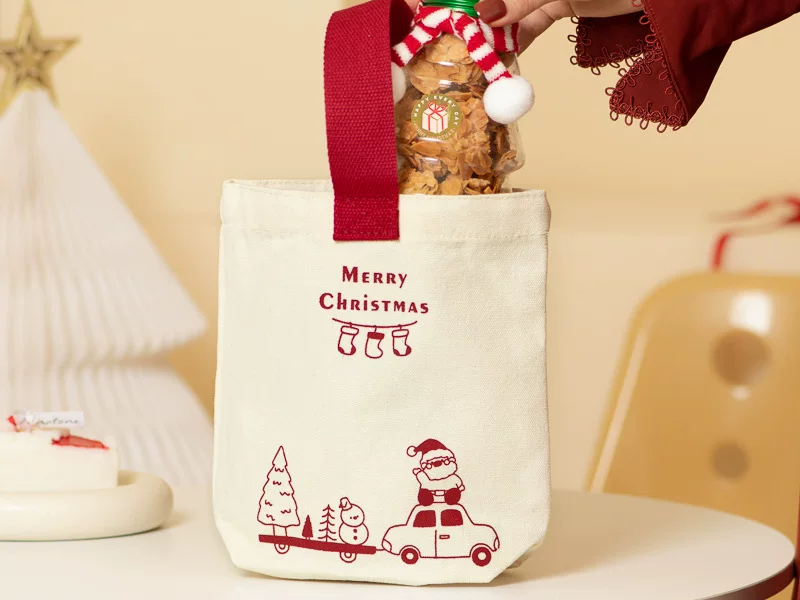
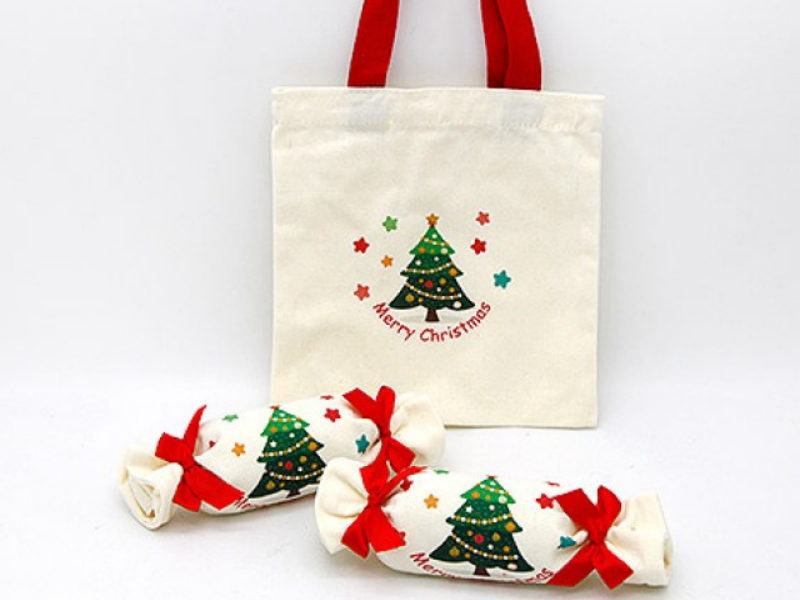
A cotton tote becomes part of the gift. The recipient walks away with something they'll use at the farmers market for years. It works best when the contents feel curated - a stack of books, pantry staples, or bath products - where the bag reinforces the sense of care put into what's inside. Natural cotton takes stamps, screen printing, and embroidery cleanly. For bulk orders with custom print options, the range of cotton shopping bags covers different weights and methods worth comparing.
Typical cost: $3–$10 per bag depending on weight and customization.
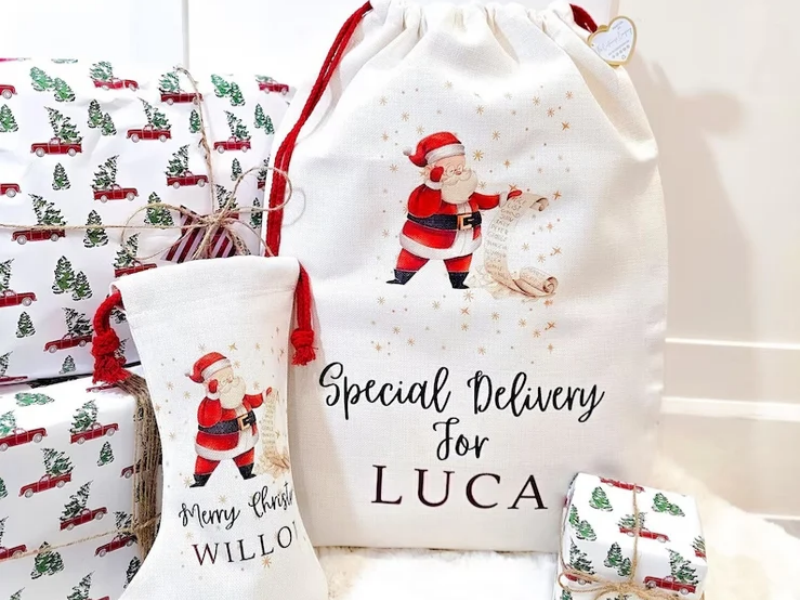
3. Drawstring Christmas Bags
Cinch-style bags keep everything secure without tissue-paper overflow - particularly good for soft gifts, spa sets, and anything slightly irregular in shape. A width of 14"–16" covers most medium gifts without looking half-empty. For volume orders, 210D polyester drawstring bags are a durable, lightweight option at scale.
Typical cost: $1.50–$5 per bag.
4. Wine Gift Bags
A bottle in a standard paper bag looks like an afterthought. A dedicated wine bag - cotton or jute, drawstring or ribbon closure - makes the same bottle feel deliberate. These work equally well for olive oil, sparkling water, a tall candle, or fresh flowers. If you're weighing fabric options, the comparison of cotton, jute, and canvas covers the practical differences.
Typical cost: $2–$8 per bag.
5. Christmas Stockings
Stockings sit between packaging and decoration. They work well for small items - chocolates, gift cards, small toys - and the ritual tends to land better with children than adults. Skip them for anything that needs to stay upright during transport. Thick fabric stockings can be personalized and reused for years; thin synthetic versions rarely survive more than one Christmas.
Typical cost: $3–$15 per stocking.
6. Mini Muslin Favor Pouches
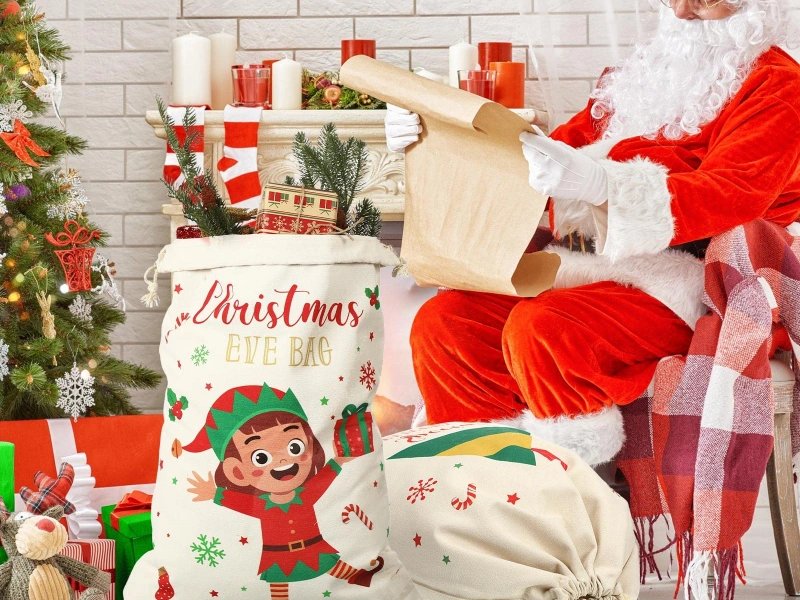
Small cotton drawstring pouches suit tiny gifts that would get lost in a standard bag: specialty tea, jewelry, a few good chocolates. A fill that works at any budget: something to smell (a small candle or lavender sachet), something to eat (chocolates), and something to read (a handwritten card). Simple, but it reads as thoughtful regardless of cost.
Typical cost: $0.50–$2 per pouch in bulk.
7. Eco-Friendly Burlap Bags
Burlap is among the most naturally biodegradable bag materials available. Its earthy texture suits homemade jams, seed packets, potted plants, and garden accessories - it communicates sustainability without needing a label. One practical limitation: burlap doesn't accept standard ink printing. Fabric stamps with textile ink or a kraft tag tied with jute twine are more reliable for decoration.
Typical cost: $1–$5 per bag.
8. Non-Woven Reusable Bags
Non-woven bags are made from bonded polypropylene - lightweight, water-resistant, and reusable many times over. Not all contain recycled content: look specifically for RPET or recycled polypropylene labeling if sustainability matters. For a realistic look at what non-woven bags can and cannot claim environmentally, the piece on whether non-woven bags are truly eco-friendly is worth reading before ordering. For large-volume gifting, these bags are the reliable choice. Look for sewn handles rather than glued ones - the difference under load is significant. See the non-woven shopping bag range for specifications.
Typical cost: $0.80–$3 per bag at volume.
9. Kraft Paper Bags with Ribbon Handles
Kraft paper bags with ribbon or twisted-paper handles sit between standard paper bags and artisan packaging. The unbleached brown base pairs naturally with jute twine, wax seals, and minimal stamp designs - a popular choice when the packaging should reflect the personal effort inside. A wax seal stamp costs under $2 per gift in materials and adds a handmade quality tissue paper won't replicate.
Typical cost: $1–$4 per bag.
How to Choose the Right Gift Bag Size
A bag too large makes a gift look sparse; one too small looks forced. Standard sizing breaks down as follows - actual dimensions vary by manufacturer:
| Size | Common Dimensions | Works Well For |
|---|---|---|
| Small | 5"–6" × 8"–9" | Gift cards, jewelry, small accessories |
| Medium | 8"–9" × 10"–11" | Books, candles, boxed chocolates |
| Large | 10"–12" × 13"–14" | Clothing, kitchen items, larger toys |
| Extra-Large | 13"–15" × 15"–18" | Board games, bundled sets, bulky gifts |
What to Put in a Christmas Gift Bag
The bag creates the first impression, but the fill determines whether the presentation works.
Step 1: Start with filler. Two or three sheets of tissue paper, loosely arranged so they puff above the bag opening. Crinkle-cut paper shred holds small items more securely and photographs better; the trade-off is cleanup. Don't overfill - filler should frame the gift, not bury it.
Step 2: Place the main gift. Heavier items sit at the base. Boxes and taller items rest on top of the filler. Keep the tallest piece near the center of the opening where it reads best.
Step 3: Add small extras. A chocolate bar, a small candle, a packet of specialty tea - these make the bag feel considered rather than minimal. They don't need to be expensive.
Step 4: Add a handwritten card. Four sentences in your own handwriting do more for the overall impression than any amount of decorative tissue.
What goes inside varies by recipient:
- Children: Bright tissue, small toys, holiday candy, sticker books. The unboxing experience is part of the gift.
- Colleagues: Keep it neutral - chocolates, a nice pen, a gift card in a small decorative envelope.
- Close friends: Layer deliberately - a book, a candle, a small personal item, a genuine note.
- Corporate recipients: Fewer, better items - one quality food product, one practical or branded item.
On a tighter budget: one well-chosen item in a muslin pouch with a handwritten note often lands better than a bag full of filler items that feel obligatory.
What "Eco-Friendly" Actually Means on a Gift Bag Label
The term gets applied broadly and often inaccurately. When sustainability matters, these are the markers worth checking.
Certified organic cotton is verified through standards like the Global Organic Textile Standard (GOTS), which covers pesticide use, dyeing processes, and labor conditions across the supply chain - not just the farming stage. A bag labeled "organic" without naming a certification standard is difficult to verify. For a practical breakdown of what each label actually covers, the article on what certifications to look for when buying bags is a useful reference.
The OEKO-TEX Standard 100 tests the finished fabric for harmful substances - it doesn't certify organic farming, but confirms the product has been tested against defined safety thresholds.
For non-woven bags, "recycled" content should be specifically labeled RPET or recycled polypropylene. An eco-sounding name proves nothing. A side-by-side material comparison is available in the piece on which bag material is truly most sustainable. The most sustainable option is almost always the one used most often - a quality bag reused across multiple seasons outperforms any single-use alternative regardless of material.
Corporate Christmas Gift Bags: What to Know Before Ordering in Bulk
Corporate gifting operates on different constraints than individual giving.
Choose unisex, neutral designs - solid holiday colors with a simple accent work across most recipient groups. For guidance on what tends to work for promotional contexts, the piece on customizable swag and reusable bag giveaways covers common approaches and what to avoid.
Plan lead time early. Custom bags with logos, embroidery, or specific Pantone colors require 4–6 weeks from artwork approval to delivery during Q4 - most buyers underestimate this. Review the guide on MOQ, lead time, and cost before requesting quotes. For print method comparisons, the overview of how to print on tote bags covers silk screen, heat transfer, and embroidery trade-offs. Custom and OEM production details are available through our OEM bag manufacturing page.
Budget reference: non-woven bags typically run $0.80–$3 per unit at 500+; cotton totes $2–$6 depending on fabric weight and print method.
Frequently Asked Questions
What do you put in a Christmas gift bag?
Tissue paper or crinkle-cut filler first, main gift next (heavier items at the base), one or two small extras, and a handwritten card. Layer from heaviest at the bottom to lightest on top.
What size Christmas gift bag do I need?
Small (5"–6" wide) for cards and jewelry; medium (8"–9") for books or candles; large (10"–12") for clothing or kitchenware; extra-large (13"+) for games or bundled sets. When uncertain, size up - a gift with room looks better than one that barely fits.
Are reusable Christmas gift bags worth the extra cost?
Yes, particularly for volume orders or gifts to people who'll use a fabric bag regularly. Per-use cost drops with each reuse. For a single gift, a quality paper bag is a reasonable choice.
What's the best gift bag for a wine bottle?
A cotton or jute wine bag with a drawstring or ribbon closure - it fits a standard 750ml bottle snugly, looks intentional, and holds up against condensation. Thin paper bags tend to tear under the combined weight and moisture.
Can I buy Christmas gift bags in bulk?
Yes. Standard bags typically start at 12–24 units; custom-printed bags generally require 200–500 unit minimums depending on supplier and print method. Larger orders bring significant per-unit cost reductions.
What's the most eco-friendly Christmas gift bag?
Unbleached organic cotton and natural burlap are among the most biodegradable options. RPET non-woven bags are practical for bulk eco-conscious orders. Durability matters as much as material - a bag used across multiple seasons beats any single-use alternative.
Final Thoughts
Choosing the right Christmas gift bag comes down to three things: what's going inside, who's receiving it, and whether the bag will be used once or many times over. Material, size, and design all follow from those answers.
Whatever you choose: add a handwritten note. It costs nothing, takes two minutes, and is consistently the part people remember longest.