A bag left crumpled in a closet corner, stuffed into a plastic bin, or dangling by its straps for months can suffer damage that no amount of conditioning will reverse - collapsed sides, cracked leather, hardware impressions pressed into the body, and color transfer that quietly kills resale value. The frustrating part is that most of this damage is entirely preventable.
Proper handbag storage comes down to three things: preparing the bag correctly before it goes away, placing it in an environment that won't work against the material, and avoiding a handful of habits that cause the most common long-term damage. This guide walks through all three - with specific guidance by material type, storage duration, and the space you're actually working with.
Before You Store: 4 Steps to Prep Any Handbag
These steps apply whether you're putting a bag away for the season or returning it to the shelf after a weekend away. The prep work is what separates bags that age well from ones that don't.
Step 1 - Empty and Clean the Interior
Start by emptying the bag completely. Check every pocket - receipts, crumbs, a forgotten lip liner - these are the most common sources of interior staining and odor over time. Turn the lining inside out where possible and shake it gently. For fabric linings, a lint roller removes debris quickly. Use a dry microfiber cloth to wipe down leather or coated interiors.
One thing to avoid: baby wipes and pre-moistened cleaning cloths. Many contain alcohol or surfactants that can break down the adhesives holding the lining in place, especially in older bags.
Step 2 - Clean and Condition the Exterior
The right approach depends on the material. As a general principle, use the gentlest method that works:
- Smooth leather (calfskin, lambskin, pebbled): Wipe with a barely damp microfiber cloth, then apply a small amount of leather conditioner if the bag hasn't been conditioned in the past year. Work it in with a clean cloth and allow it to absorb fully before storage.
- Canvas or coated canvas: Dry brush to remove surface dust. A lightly dampened cloth handles most marks. Don't soak the material or scrub at coated areas.
- Suede or nubuck: Use a dedicated suede brush or suede eraser only. Water leaves permanent marks on both materials - even a few drops.
- Patent leather: Wipe with a clean, dry cloth. No conditioner needed.
- Vegan or synthetic leather: A damp cloth works well. Skip leather conditioner - most synthetic materials don't absorb it and it can leave an oily residue.
Whatever product you use, test it on a hidden area first. And always let the bag dry fully before putting it away - overnight is safer than four to six hours, especially in humid climates. Sealing even trace moisture inside a dust bag is one of the fastest ways to cause mold.
Step 3 - Stuff It to Maintain Shape
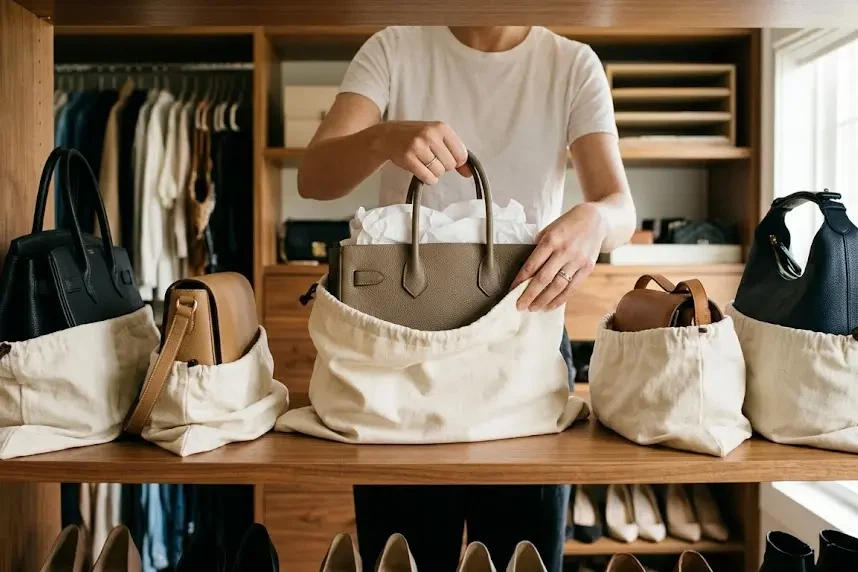
This step matters most for bags with a defined structure: totes, satchels, top-handle styles, anything with a flat base. Without support, the sides begin to cave inward and the base compresses under its own weight.
Fill the bag loosely with acid-free tissue paper. It's inexpensive, won't transfer dye to light-colored linings, and can be reused. Clean cotton t-shirts or small folded towels also work. The goal is to restore the bag to its natural resting shape - not to stretch it beyond what it comfortably holds.
Avoid two things: newspaper (the ink transfers, particularly onto cream or white linings) and overstuffing. A bag that's been forced into an unnatural shape during storage is just as misshapen as one that's been left to collapse.
Step 4 - Handle Hardware and Straps
Metal hardware - clasps, chain straps, D-rings, buckles - left in direct contact with leather will eventually leave indentation marks, especially on soft leathers like lambskin or nappa. Before storage, wrap any hardware loosely in a clean paper towel or a strip of soft cloth to create a buffer.
For removable straps, detach them if you can. Fold or coil them gently and tuck them inside the bag or store them alongside it. For fixed straps, coil them neatly and lay them across the top of the bag rather than letting them dangle or press against the body under tension.
How to Store Handbags by Material
This is where most storage guides fall short - treating all bags the same way. The material determines the real risks. What works for a coated canvas tote will damage a lambskin clutch.
Smooth Leather (Calfskin, Lambskin, Pebbled)
Leather conservators generally recommend storing leather goods at 40–50% relative humidity - low enough to prevent mold, high enough to prevent the material from drying out and cracking. Both extremes cause permanent damage.
Always store leather in breathable dust bags - soft cotton or non-woven fabric. Never use plastic bags or airtight containers. Leather needs airflow to stay supple. Keep it away from direct sunlight and heat sources, both of which accelerate oxidation and cause fading. A dark shelf or closed cabinet is ideal.
One thing that surprises many owners: a black leather bag stored touching a lighter-colored leather bag can transfer dye over time, especially in warm conditions. Keep bags with strongly contrasting colors separated.
Canvas and Coated Canvas
Coated canvas - common in heritage luxury bags - is generally more resilient than leather during storage. The risk most people don't anticipate is heat: coated surfaces can become slightly tacky at high temperatures and stick to whatever they're resting against. Store coated canvas bags separated with tissue paper, and never leave them in a hot car or near a radiator.
For more on how canvas fabric behaves under different conditions, the material properties are worth understanding before making storage decisions.
Suede and Nubuck
Suede requires the most careful handling of any common bag material. It's vulnerable to water damage, oil absorption, and permanent compression. Store suede bags upright with sufficient stuffing and don't stack anything on top of them.
Before long-term storage, apply a suede-specific water repellent spray and allow it to cure fully - usually 24 hours. If your storage area is prone to humidity, place a small silica gel packet near (not inside) the bag.
Patent Leather
Patent's glossy finish creates one specific storage problem: it can bond with other materials when left in contact for extended periods. This happens faster in warmer conditions. Store patent leather bags individually, wrapped lightly in acid-free tissue paper, and don't let them touch other bags, fabric shelf liners, or even textured dust bags.
If you're curious how PVC and patent-style coatings behave at a material level, that context helps explain why the separation rule matters.
Exotic Skins (Crocodile, Python, Ostrich)
Exotic skin pieces are sensitive to both low humidity - which causes scales or texture to dry and crack - and rapid temperature changes. If you own pieces intended for long-term storage, a dedicated electronic dry cabinet that controls both humidity and temperature is worth considering. At minimum, store them individually in soft cloth dust bags, stuffed properly, away from all light sources.
Vegan and Synthetic Leather
Vegan leather doesn't condition the way animal leather does, but it's equally vulnerable to UV damage and heat. Over time, UV exposure degrades the surface layer and causes it to crack and peel - a process that's irreversible once it starts. Keep vegan bags in a consistently shaded space, away from windows. For more background on how synthetic and natural bag materials compare in durability, it's useful reading for anyone maintaining a mixed collection.
Storage Options - Where to Actually Keep Your Bags
The location matters as much as the preparation. Here's an honest look at the most practical options.
Open Shelving
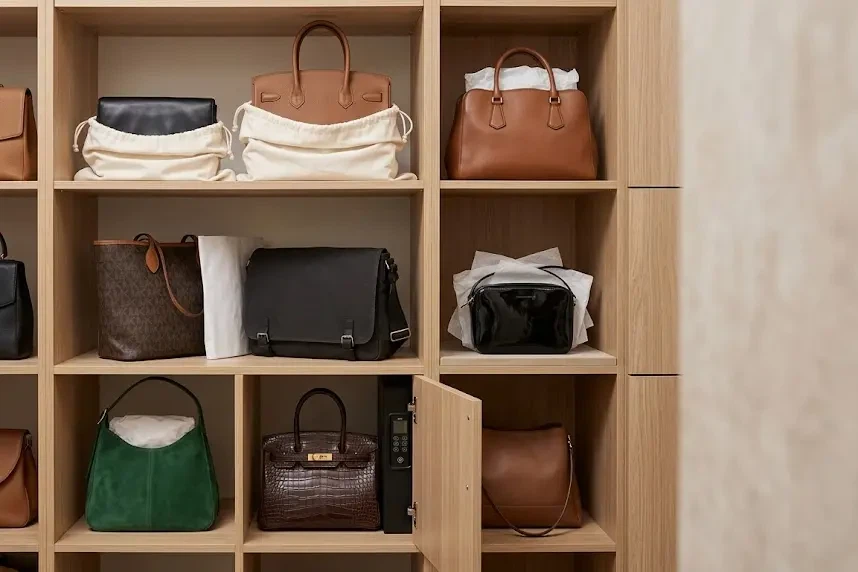
Simple and accessible. Place bags base-down, upright, or slightly angled - whichever holds their natural shape best. Use acrylic shelf dividers between bags to keep them from leaning into each other. Don't stack bags on top of one another; the weight compresses the bag at the bottom permanently over time.
Best for: Bags you use regularly and want easy access to.
Watch out for: Dust buildup and light exposure on open shelves.
Dust Bags
A cloth dust bag is the single most effective and affordable storage tool available. It protects against dust, limits light exposure, and lets the material breathe. Use the original dust bag your bag came with if possible. A soft cotton pillowcase makes a good substitute if you've lost it.
To keep track of which bag is inside, attach a small label or tuck a phone snapshot into the top. Avoid storing bags in plastic - it traps moisture and prevents airflow. The ideal dust bag material is soft, unbleached cotton; non-woven fabric also works well since it's breathable and lint-free.
Clear Acrylic Boxes or Display Cases
These work well for infrequently used or collector-level pieces. The transparency makes it easy to identify bags without handling them. The trade-off: fully enclosed acrylic boxes don't breathe. Add a small rechargeable silica gel pack inside each box, and open the boxes for ventilation every few months to prevent stale air buildup.
Hooks and Hanging Organizers
This is where many people go wrong. Hanging a structured bag from a hook - by its handles or straps - puts continuous downward stress on the attachment points and slowly distorts the bag's frame and stitching. Over months, this becomes permanent.
Reserve hooks for soft, unstructured bags: canvas shoppers, nylon totes, fabric bags without a rigid frame. Never hang leather bags or anything with a defined silhouette by its straps. For everyday cotton shopping bags or lightweight non-woven carriers you grab daily, a hook by the door is perfectly fine.
Wardrobe, Closet, or Cabinet
A closed closet is the ideal environment for most bags: naturally dark, typically climate-controlled, and shielded from air vents. The one caveat: avoid closets adjacent to bathrooms (higher ambient humidity) or exterior walls that experience significant seasonal temperature swings.
Daily Rotation vs. Long-Term Storage
Not every bag needs the same level of care every time it goes back on the shelf. The effort scales with how long the bag will sit unused.
Bags You Use Regularly
For bags you carry several times a week or swap between monthly, the priority is maintaining shape and preventing surface buildup. When you return a bag to the shelf, straighten any twisted straps, confirm the base is sitting flat, and wipe down the exterior if it was exposed to rain or grime. A monthly interior wipe-down and exterior conditioning pass keeps daily bags in good shape without major effort.
Bags Going into Seasonal or Archive Storage
These deserve the full preparation: thorough cleaning, conditioning, complete drying, stuffing, hardware wrapping, and a dust bag. For bags that won't be used for three months or more, add a few extra steps:
- Place a silica gel packet inside the dust bag to manage humidity
- Avoid stacking anything on top during storage
- Set a reminder to check them every three to four months - open the dust bag, let the bag air for a couple of hours, and inspect for early signs of mold, cracking, or unusual odor
Leather that sits sealed for an extended period can dry out even without heat exposure. A brief airing and a light re-conditioning before returning a bag to storage extends its life considerably - and catches problems before they become irreversible. This principle applies whether you're storing a designer handbag or a quality canvas weekend duffel between trips.
The Ideal Storage Environment
Even a perfectly prepared bag will deteriorate in the wrong conditions. Three environmental factors matter most.
Humidity
Leather and most natural bag materials do best at 40–50% relative humidity - a range consistent with recommendations from textile and leather conservators, including those used in museum collections management. Below that threshold, materials dry and crack. Above it, mold and mildew become real risks, and metal hardware begins to tarnish or corrode faster.
In high-humidity climates, place silica gel packets in or near stored bags. Many types are rechargeable - spread them on a baking sheet and warm them in the oven according to the manufacturer's instructions to restore their absorbing capacity. For a large collection or a particularly humid home, a small dedicated dehumidifier or electronic dry cabinet is worth the investment.
In very dry climates, or during winter when indoor heating runs continuously, watch for stiffness in leather as a sign that humidity levels are too low. A light conditioning pass is the simplest fix.
Temperature
Most bags store comfortably at normal indoor temperatures - roughly 60–75°F (15–24°C). The environments to actively avoid:
- Attics and garages: Subject to extreme seasonal swings that accelerate deterioration in both leather and hardware
- Cars: Vehicle interiors can exceed 130°F (54°C) in summer - hot enough to warp handles, blister coatings, and dry out leather rapidly
- Near radiators or heating vents: Constant dry heat desiccates leather and weakens adhesives over time
Light Exposure
Both natural sunlight and prolonged artificial light - particularly fluorescent bulbs - cause fading, oxidation, and yellowing, especially on light-colored leathers and dyed canvas. Dust bags provide a first layer of protection. For longer storage, a closed cabinet is better than open shelving. If you prefer to display your collection, LED closet lighting produces significantly less UV than fluorescent alternatives.
7 Common Handbag Storage Mistakes
Even careful bag owners make these errors. Here's what to watch for and what to do instead.
- Storing in a plastic bag or airtight container. Plastic traps moisture and prevents leather from breathing - creating a humid microclimate that promotes mold and musty odor over time. Use breathable cloth dust bags instead.
- Hanging structured bags by their straps. Continuous downward weight on handle attachment points causes stitching to loosen and handles to stretch permanently. Store shaped bags upright on a shelf, never suspended.
- Leaving hardware in direct contact with leather. Metal clasps, chains, and buckles pressed against leather leave indentation marks that are nearly impossible to reverse. Wrap hardware loosely or use tissue paper to separate metal from leather before storing.
- Putting a damp or freshly cleaned bag away immediately. Even if the exterior feels dry to the touch, the interior or seams may still hold moisture. Mold can establish in sealed conditions before you know it's there. Give the bag overnight to dry fully.
- Stacking bags on top of each other. The bag at the bottom takes the full weight of everything above it, compressing the base and bowing the sides outward. Store bags side by side rather than stacked.
- Using newspaper for stuffing. Newspaper ink transfers readily onto interior linings - particularly light-colored ones. Use acid-free tissue paper, clean white cotton t-shirts, or unprinted packing paper instead.
- Leaving long-term storage bags completely unchecked. A bag sealed in a dust bag for a year in imperfect conditions can dry out, develop odor, or show early mold without any visible sign from the outside. Check stored bags every three to four months: air them out, inspect briefly, and recondition if needed.
Frequently Asked Questions
Should handbags be stored upright or on their side?
It depends on the bag's construction. Structured bags with a firm base - top-handle styles, doctor bags, boxy satchels - store well upright. Slouchy or soft bags hold their shape better lying on their back with tissue paper inside for support. The goal in either case is to keep the bag in its natural resting position, not propped into something it isn't.
Is it okay to store handbags in plastic bags?
No. Plastic prevents airflow and traps moisture, which leads to mold, musty odor, and - for leather - accelerated drying. Breathable cotton dust bags or a soft pillowcase are better options for any material.
How do I store handbags in a small closet?
Use vertical space. A small shelf unit or stackable risers create separate levels so bags aren't competing for floor space. Acrylic shelf dividers prevent leaning. Hanging organizers work for unstructured fabric bags but aren't appropriate for shaped leather pieces. If you're short on shelf space, clear acrylic display boxes stacked carefully (with bags protected inside) use vertical real estate efficiently.
How do you keep a handbag from losing its shape?
Stuff it. Fill the interior with acid-free tissue paper or clean soft fabric to fill the space without overstretching. Then store it in the position that matches its natural shape - base down for structured bags, on its back for softer styles. Consistent stuffing and a stable storage position do more for long-term shape retention than any product.
Can you store handbags in boxes?
Yes, with one adjustment: sealed boxes restrict airflow, so add a small silica gel pack inside and open the box for ventilation every few months. Original brand boxes with the lid slightly ajar are a good option for bags you rarely use but want well-protected.
How often should I condition a leather handbag?
For bags in regular use, once or twice a year is typically enough. Bags going into long-term storage benefit from a conditioning pass before going away and another when they're brought back out - leather that's been sealed away for months will often be slightly drier than it looks.
How do I prevent a stored bag from developing a smell?
Make sure it's fully clean and dry before storage. A small cedar block placed near (not inside) the bag naturally absorbs moisture and mild odor. Avoid scented sachets directly inside the bag - the fragrance compounds can interact with lining materials over time. If a bag already has a musty smell, air it out in a well-ventilated room for 24–48 hours before attempting any other treatment.
Should I store bags with the zipper open or closed?
For long-term storage, leave zippers slightly open. This relieves tension on the zipper tape and allows a small amount of airflow into the interior. For bags you're using regularly, either works.
What's the best way to store a Chanel or other high-end designer bag?
Follow the material rules for the specific leather involved - most Chanel classics use lambskin or caviar leather, both of which need breathable dust bags, stable humidity, and no direct light. Store flap bags stuffed lightly, with the chain tucked inside or wrapped. If the bag came with an original box, use it with the lid slightly ajar rather than sealed. For insight into how construction and materials affect care needs, understanding the bag's structure helps prioritize the right precautions.
Can leather bags get moldy in storage?
Yes - particularly when stored in high humidity, sealed before fully dry, or left unchecked for a long period. Mold on leather often appears as a white or gray bloom on the surface. Silica gel packets and breathable dust bags are the primary preventive tools. If mold does appear, wipe the surface gently with a dry cloth and allow the bag to air out fully before reconditioning. Severe mold typically requires professional treatment.
Useful Tools for Handbag Storage
You don't need much. This is a short list of genuinely useful items - nothing superfluous.
| Tool | What It Does | Notes |
|---|---|---|
| Breathable cotton dust bags | Protects from dust, allows airflow | Use original brand bags or a soft cotton pillowcase |
| Acid-free tissue paper | Stuffing without dye transfer | Reusable; available at art supply or packaging suppliers |
| Rechargeable silica gel packets | Controls humidity in enclosed spaces | Follow manufacturer instructions for oven recharging temperature |
| Acrylic shelf dividers | Keeps bags separated and upright on shelves | Adjustable versions work for different bag widths |
| Cedar blocks | Natural odor and light moisture absorption | Place near bags, not inside them |
| Microfiber cloths | Gentle exterior cleaning and conditioning application | Use a fresh, dry cloth for each bag |
| Electronic dry cabinet | Precise, consistent humidity and temperature control | Worth considering for large or high-value collections |
The Bottom Line
Good handbag storage isn't complicated, but it does require consistency. Clean the bag properly before it goes away. Store it in stable conditions - avoiding moisture extremes, heat, and direct light. Check on long-term pieces every few months rather than leaving them sealed for a year.
The specifics vary by material: suede needs different handling than patent leather, and a daily bag has different needs than one going into seasonal storage. But the underlying logic stays constant - keep the bag clean, keep it shaped, and keep it in conditions that won't work against the material.
For bags you carry regularly, these habits take minutes and make a measurable difference over years. For bags that represent real investment, they're the difference between a piece that holds its value and one that quietly deteriorates on a shelf.
If you're thinking about how different bag materials - cotton canvas, non-woven, polyester - handle daily use and long-term wear, our guides on protecting cotton bags, natural fabric durability, and keeping structured bags clean are useful next reads.