Quick Answer: What Are the Beach Bag Essentials for Women?
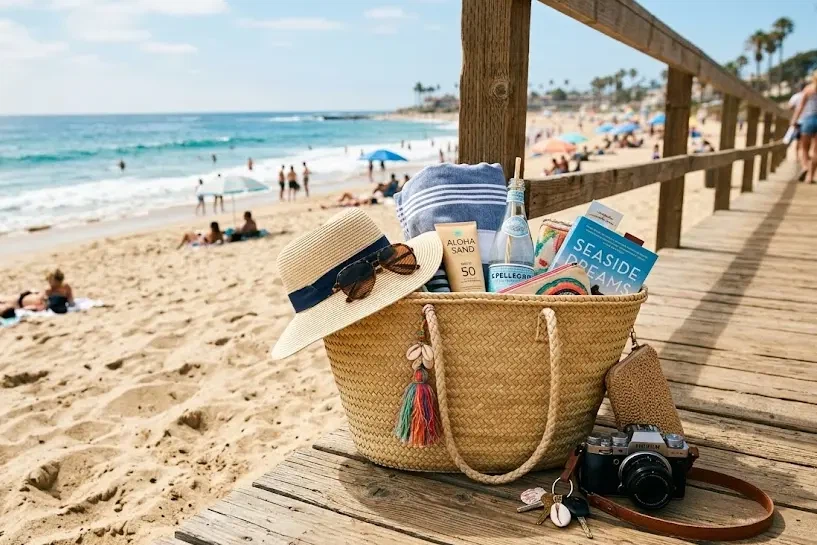
The non-negotiable beach bag essentials for women are: reef-safe sunscreen (SPF 30 or higher), a microfiber quick-dry towel, an insulated water bottle, a wide-brim sun hat, polarized sunglasses, a waterproof phone pouch, a swimsuit cover-up or rash guard, SPF lip balm, healthy snacks, a compact first aid kit, a dry bag for wet items, hair ties and a wide-tooth comb, a leave-in detangling spray, a waterproof wallet with cash, and entertainment that won't get ruined. Everything else is personal. These 15 are the ones you'll actually miss if they're not there.
My first real summer on the Gulf Coast, I showed up with a canvas weekender, half a tube of last year's sunscreen, and exactly one sandal - the other had been sitting in my back seat since April. Nothing went catastrophically wrong, but nothing felt effortless either. Every 10 minutes I was digging through sand-caked lip balm to find my keys. I reapplied SPF that had probably expired. I went home pink-shouldered and mildly dehydrated, because I'd left my water bottle on the kitchen counter.
That trip is the reason this beach packing list for women exists. After enough beach days to know what actually gets used and what just takes up space, here's what I'd put in every tote - along with the specific reasoning behind each item that most guides skip.
How to Choose the Right Beach Tote Bag Before You Pack a Single Thing
Most beach day problems begin before you leave the house - with the wrong bag. A tote that's too small forces trade-offs at the car. A bag without structure tips over in sand, burying your sunscreen under a wet towel. And if the lining isn't water-resistant, a damp swimsuit makes everything else damp by the time you get home.
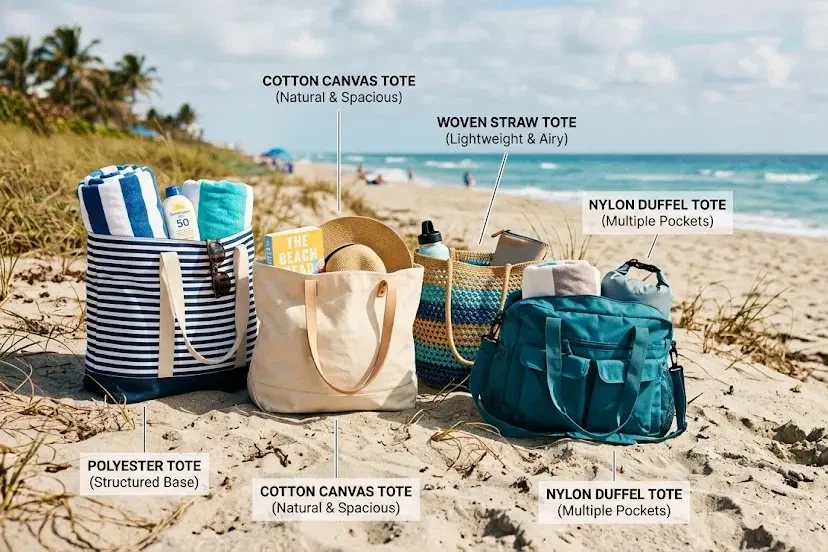
Size first: for a solo day trip, 18 to 22 inches wide holds everything on this list with room left over. Structure second: polyester beach totes with a flat base panel stay upright in sand, which sounds like a minor point until the third time your bag tips over and dumps sunscreen on your towel. Water resistance third: a fully waterproof lining is ideal; at minimum, the outer fabric should repel splashing and not absorb sand the way untreated cotton does.
If natural materials matter to you, cotton canvas beach bags are breathable and pack flat - just let them air-dry completely before storing, and keep wet items in a separate dry bag inside. For the lightest possible carry on shorter trips, non-woven beach totes fold to almost nothing and rinse clean in seconds. If you're packing for more than one person, a duffel-style tote with multiple compartments carries more without the shoulder strain of an overstuffed open tote.
Sun Protection Essentials: Sunscreen, Lip Balm, Hats, and Sunglasses
These four items are the foundation of the bag. Miss any one of them and you'll feel it for the next two days.
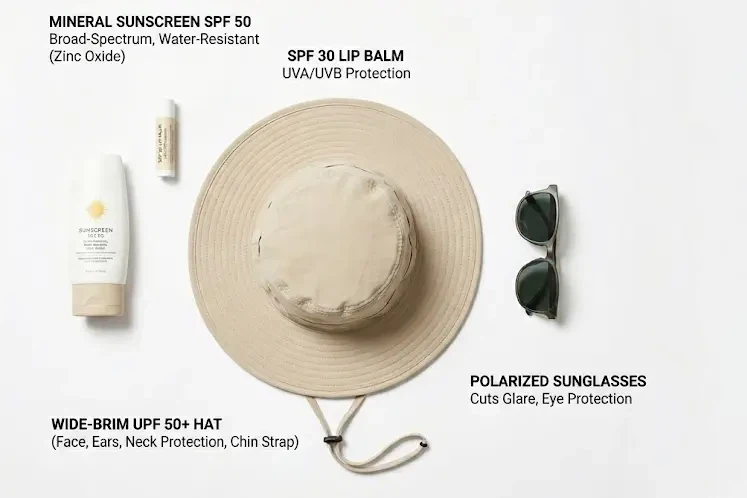
Sunscreen. The American Academy of Dermatology recommends a broad-spectrum, water-resistant formula with SPF 30 or higher, applied 15 minutes before heading out and reapplied every two hours - or immediately after swimming or sweating. Beyond the SPF number, check the ingredient list. Oxybenzone and octinoxate - chemicals in many conventional sunscreens - are linked to coral reef bleaching and are now banned for sale in Hawaii, Palau, and a growing list of coastal destinations. A mineral-based formula using zinc oxide or titanium dioxide protects your skin without those environmental trade-offs, and dermatologists note it's also gentler on sensitive skin.
Lip balm with SPF. Lip skin contains almost no melanin compared to the rest of your face, which is why lips burn faster and with less UV exposure than almost any other area. An SPF 30 lip balm applied at the same time as your sunscreen costs two seconds and prevents the kind of cracked, peeling aftermath that shows up a full day after the beach.
Wide-brim hat. A brim of at least three inches provides real shade for your face, ears, and neck - areas where sunscreen is easy to miss on reapplication. If you're swimming, a floppy straw hat is useless. A packable UPF 50+ nylon hat with a drawstring chin strap survives getting wet and won't fly off in the water. The straw version is fine if you're staying dry on a lounger; otherwise, choose the one you'll actually keep on your head.
Polarized sunglasses. Regular UV-blocking lenses protect your eyes from sun damage, which matters. Polarized lenses go further by cutting the glare that reflects off water and sand - a real difference when you're looking at the ocean for several hours. Less eye strain, less squinting, sharper vision in bright light. It's one of the few upgrades on this list that's immediately noticeable.
Staying Hydrated at the Beach Is Harder Than It Sounds
You lose fluids faster in direct sun and heat than you expect - especially when you're swimming, which feels effortless but is physically demanding. A 32-ounce insulated stainless steel water bottle keeps water cold for several hours and holds enough for a morning session. For a full day, bring two bottles or plan to refill.
If you're staying more than two hours or bringing food, a dedicated cooler bag makes more difference than most people plan for. Insulated polyester cooler bags with an aluminum foil thermal layer and PEVA waterproof lining keep drinks cold and food safe in heat that a standard tote handles poorly. For a lighter option on shorter trips, non-woven insulated cooler totes hold a few drinks and snacks without the bulk of a proper cooler.
For snacks: bring food with real staying power. Almonds, trail mix, protein bars, and fruit in a sealed container hold up in heat and keep energy stable. Skip chocolate and anything that spikes and crashes. Frozen grapes transferred to a container before you leave work surprisingly well - they stay cold for about an hour and double as a cooling snack mid-afternoon.
What Women Specifically Need That Most Packing Lists Skip
Here's where the "for women" in the title actually pays off.
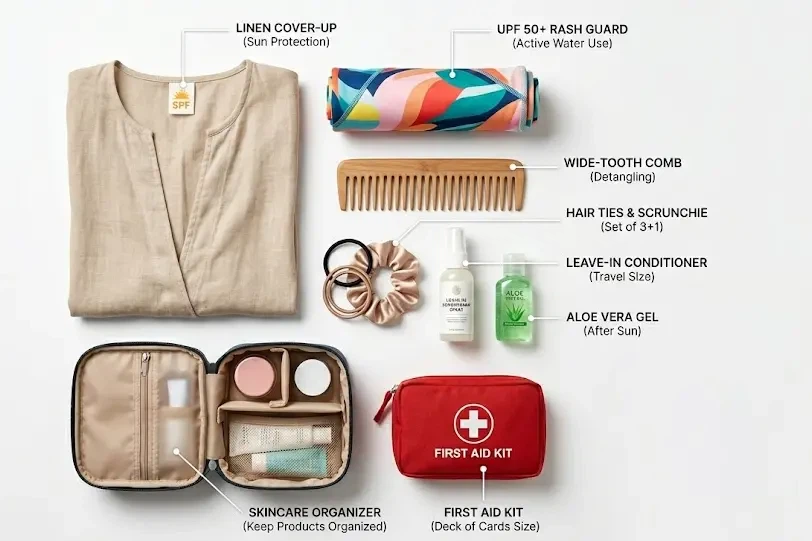
Cover-up or rash guard. A thin linen or cotton cover-up does two things: sun protection during peak UV hours (10 a.m. to 4 p.m.) and a functional layer if you stop somewhere for lunch or a drink afterward. A UPF 50+ rash guard is the better choice if you're snorkeling, paddleboarding, or spending serious time in the surf. Pack one even if you think you won't need it. The days you leave it in the car are the days you want it.
Hair tools. Salt water leaves hair tangled in a way that brushes make significantly worse. A wide-tooth comb is the right tool for wet, salt-matted hair - it moves through without snapping. Pack at least three hair ties (they disappear at the beach at a rate that defies explanation) and a travel-size leave-in conditioner or detangling spray if your hair is long or fine. A silk scrunchie reduces friction breakage on a bun, which adds up over a full day in the sun.
Skincare for after sun exposure. A small aloe vera gel or after-sun lotion for the ride home takes up almost no space. If you have a multi-step skincare routine or you're managing products that need to stay organized and separate from beach gear, keeping them in a dedicated organizer makes a real difference. The question of what distinguishes a proper travel organizer from a basic zip pouch applies here just as much as it does in a hotel bathroom.
First aid kit with the extras women actually use. Bandages in two sizes, antihistamine tablets for stings, ibuprofen - which, for women, is also useful for reasons beyond sunburn - blister pads for sand-walking in the wrong shoes, and a small roll of medical tape. The whole kit packs to the size of a deck of cards. Put it in the same pocket every time and forget about it until you need it.
The Items That Prevent Everything Else From Getting Ruined
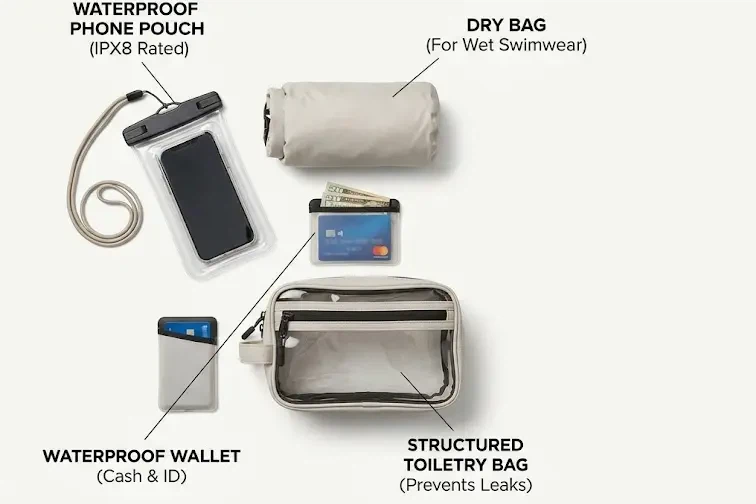
Waterproof phone pouch. Sand is abrasive, salt water is corrosive, and a single unexpected splash can damage a phone that you thought was safely out of reach. A pouch rated IPX8 - the highest standard under IEC 60529, meaning submersion beyond one meter - lets you use the touchscreen through the case and take it near the water without anxiety. Clip it to a bag strap or bikini tie so it's accessible without going loose in the main compartment.
Dry bag or large ziplock. A wet swimsuit in an open tote makes everything else wet. It's not dramatic, it's just physics. Keep a dry bag flat at the bottom of your tote at the start of the day; when you're packing up, wet items go in there before anything else gets loaded back in. Thirty seconds of habit that saves three days of damp-bag smell.
Waterproof wallet with cash. Beach vendors, parking, and ice cream stands don't always take cards - and card readers have a talent for going offline on busy summer afternoons. A small waterproof pouch with your ID, one card, and some cash is enough. Leave your main wallet in the car. Less to lose, less to track down in the sand.
For sunscreen, skincare, and any liquids with leak potential, a structured travel toiletry bag with a wipe-clean interior is worth having as an interior organizer. A rogue sunscreen cap shouldn't be allowed to saturate your whole tote.
Entertainment Worth Bringing (and the Format That Survives the Beach)
A physical book or a waterproof-cased e-reader beats a phone at the beach in every practical way - no sun glare, no overheating, no notifications pulling you out of the afternoon. A waterproof e-reader sleeve costs under $20 and means you don't have to panic when spray hits it. For music, a waterproof Bluetooth speaker handles near-water use better than earbuds, which can be damaged by extended sweat exposure in summer heat.
Complete Beach Bag Packing Checklist for Women
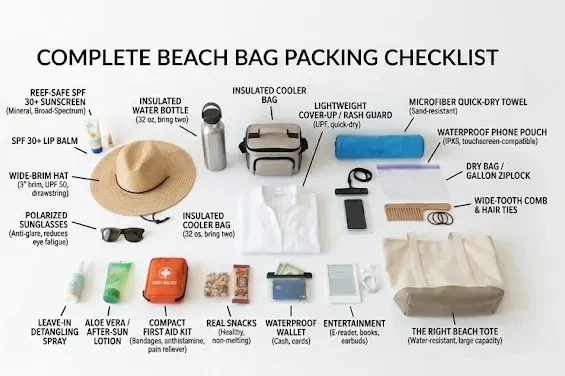
- Reef-safe SPF 30+ sunscreen - broad-spectrum, mineral formula preferred; reapply every two hours
- SPF 30+ lip balm - apply every time you reapply sunscreen
- Wide-brim hat (3-inch brim minimum, UPF 50) - drawstring strap if you're going in the water
- Polarized sunglasses - cuts glare off water and sand, reduces UV eye fatigue
- Microfiber quick-dry towel (60 x 30 inches minimum) - sand-resistant, packs to the size of a paperback
- Insulated water bottle (32 oz) - bring two for a full day in summer heat
- Insulated cooler bag - essential for any trip longer than two hours
- Lightweight cover-up or UPF rash guard - for peak UV hours and beach-to-lunch transitions
- Waterproof phone pouch (IPX8) - clips to a strap, touchscreen-compatible
- Dry bag or gallon-size ziplock - wet items go here first before repacking
- Wide-tooth comb and 3+ hair ties - salt water tangles are undefeated without these
- Leave-in detangling spray - especially important for long or fine hair
- Aloe vera or after-sun lotion - small tube for the ride home
- Compact first aid kit - bandages, antihistamine, ibuprofen, blister pads
- Real snacks - nuts, protein bars, sealed fruit; avoid anything that melts or crashes energy
- Waterproof wallet with cash and one card - main wallet stays in the car
- Entertainment - waterproof-cased e-reader, book, or sealed earbuds
- The right beach tote - structured, water-resistant, large enough for all of the above
What to Leave Behind - This Matters as Much as What You Pack
Most beach packing guides don't talk about this, but the wrong items in your tote create as many problems as missing the right ones.
Jewelry you'd be upset to lose. Salt water, sand, and sunscreen work on metals and settings faster than you'd expect. Leave anything irreplaceable at home or locked in the car.
Your full wallet. If it goes in the sand, you lose everything at once. Carry the minimum and leave the rest.
Anything fragile without a proper case. Unprotected e-readers, sunglasses in a soft cloth pouch, electronics without cases. The beach finds the one thing you didn't protect.
Heavy items you won't actually use. A full makeup kit for a day in the surf. Three books when you'll read half of one. A laptop "just in case." A rule I follow: if you haven't touched it by 11 a.m., it probably shouldn't have left the car.
How to Pack a Beach Bag So You're Not Digging for Everything
Packing order is one of those things that sounds trivial until the fourth time you've emptied the whole bag looking for your car key. Here's what actually works:
- Heavy items on the bottom: water bottles, cooler inserts, shoes
- Towel next, rolled rather than folded - takes less vertical space and comes out without displacing everything else
- Sunscreen, wallet, and phone pouch in an exterior pocket or right at the top - you'll reach for these every hour
- Liquids and toiletries inside a separate organizer, so a rogue cap doesn't become a bag-wide problem
- Wet items into the dry bag before anything else goes back in at the end of the day
If you go to the beach regularly, keep a permanent kit of non-perishables pre-packed in your tote: dry bag, first aid kit, hair ties, lip balm, spare sunglasses. On beach day, you only add water and food. You'll be out the door in under 10 minutes.
The bag's structure is what makes this system work or fall apart. A flat base, exterior pockets, and a wipe-clean lining aren't optional features - they're the difference between a bag that supports the system and one that fights it. For teams sourcing bags for resorts, retail brands, or promotional programs, the construction details that make a tote genuinely functional at the beach - reinforced handles, structured paneling, waterproof lining - are worth specifying from the start. Our custom beach bag specifications are built around exactly those real-use requirements.
Frequently Asked Questions: Beach Bag Essentials for Women
What features should I actually look for in a waterproof beach bag?
Focus on: water-resistant or waterproof outer fabric, a wipe-clean interior lining, double-stitched or webbing handles, a flat base panel that keeps the bag upright, and at least one exterior pocket for items you need without digging. A zipper top keeps sand out, but an open-top tote with good structure is often more practical for a full day of loading and unloading. The difference between a well-made beach bag and a cheaply made one shows up by mid-summer.
What size beach bag do I actually need?
18 to 22 inches wide handles everything on this list comfortably for one person. Anything smaller and you'll start making trade-offs. Packing for two people or a toddler? Size up to 24 inches, or use a second lightweight tote specifically for towels and overflow gear.
What's the best material for a women's beach bag?
Water-resistant polyester is the most practical all-around choice - it repels moisture, doesn't trap sand like raw cotton, wipes clean easily, and holds up to UV without fading quickly through a season. Cotton canvas suits people who prefer natural materials and are willing to fully air-dry the bag before storing. Woven straw and raffia look great on a chair by the pool, but aren't built for surf use or being repeatedly stuffed with wet gear.
How do I keep sand out of my beach bag?
Keep the bag off the ground when possible - hang it on a chair back or rest it on top of a cooler. Store items in interior pouches so sand doesn't work through the main compartment. After each trip, shake the bag completely inside out, then wipe the interior with a damp cloth. A structured bag that holds its shape upright collects dramatically less sand than a soft tote that sags down onto the beach.
Do I need a separate cooler bag or can one tote handle everything?
For a trip under two hours with just a few drinks, a tote with a small insulated insert can work. For anything longer - especially in heat above 85°F - a dedicated insulated bag is the right call for food safety and drink temperature both. Cotton insulated cooler totes are a good option for eco-conscious packing; they use natural outer materials with proper thermal lining inside. For heavier loads, a full polyester insulated cooler with a structured base handles more volume without compromising temperature retention.
What's the biggest mistake women make when packing a beach bag?
Packing for a worst-case day instead of a realistic one. That means carrying too much - a full makeup kit for a day in the ocean, three layers of clothing for 90-degree weather, or a bag so heavy it's uncomfortable to carry. The beach should feel easy. If you can't carry the bag comfortably with one hand, something can stay in the car.