Simple, reusable, and inexpensive, mesh bags protect your clothes during the wash cycle by keeping delicate items away from the drum, the agitator, and the heavier garments sharing the load. How effective they are depends on three things: what you put inside, how you use them, and which type you buy. This guide covers all three, including the mistakes most people make and the one product claim that gets the category wrong.
What Is a Mesh Laundry Bag?
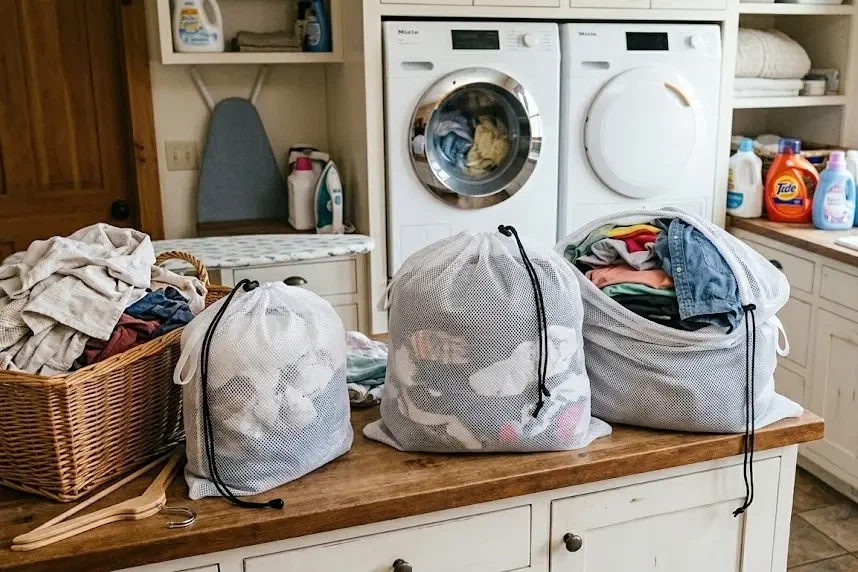
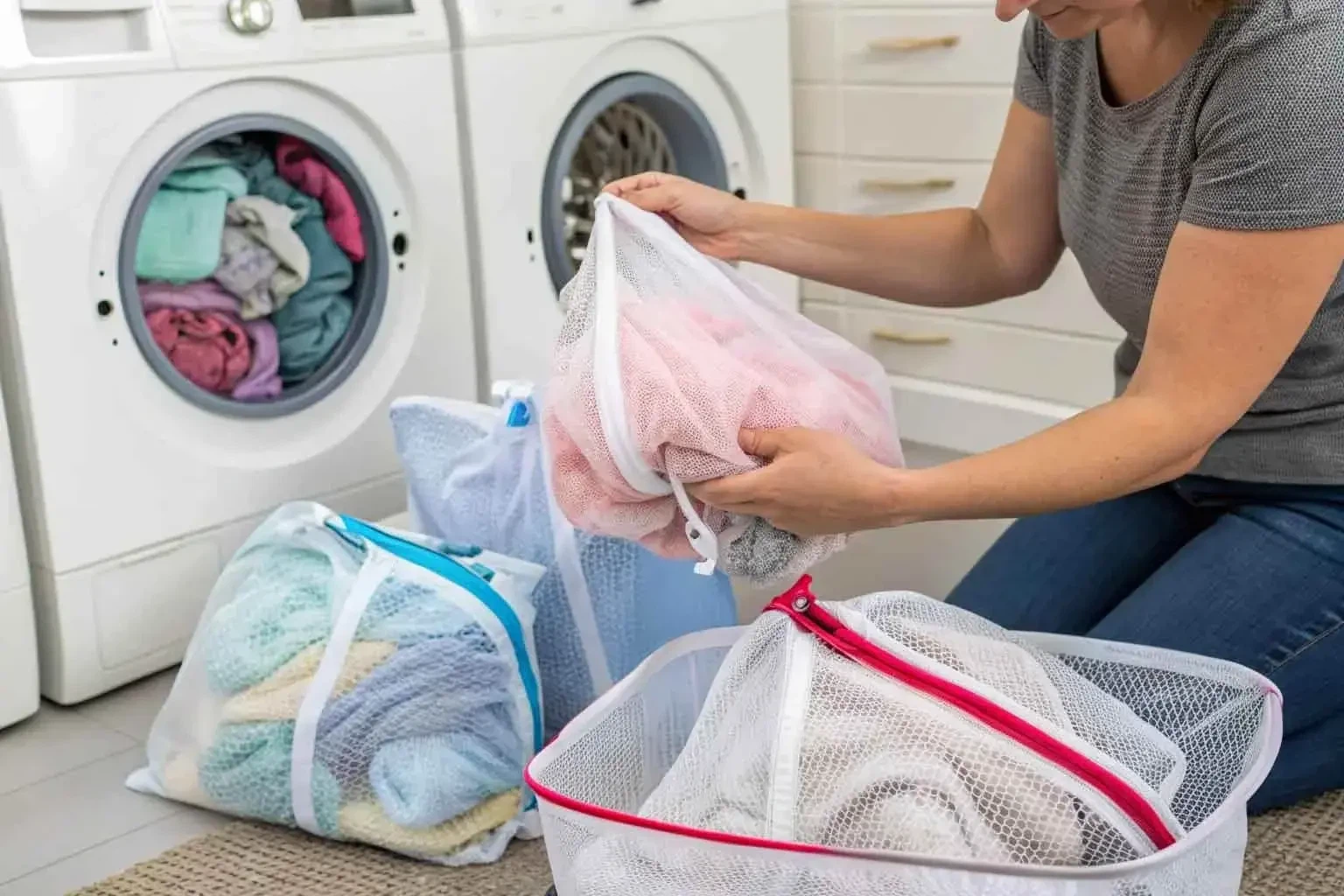
A mesh laundry bag is an open-weave bag - typically made from polyester or nylon - that holds delicate items during machine washing. You place garments inside, zip it shut, and add the whole bag to your regular wash load alongside everything else.
The weave does two things simultaneously: water and detergent pass through the open mesh freely so clothes get genuinely clean, while the bag itself prevents direct contact between your delicates and the drum, agitator, or rougher items in the cycle. Most bags close with a zipper, often fitted with a small fabric or elastic flap over the zipper head to stop the teeth from scratching the drum lining or other garments.
They come in several sizes - small bags suited to lingerie and socks, larger versions for knitwear and blouses. If construction details matter to you beyond the basics, this breakdown of polyester mesh laundry bag material specs covers weave density, denier, and what to look for in zipper quality.
What to Put in a Mesh Laundry Bag
The short answer: anything delicate, small, or prone to snagging. The practical breakdown is below.
Items That Benefit Most
- Bras and underwire lingerie - hooks snag neighboring fabrics, and underwires can warp or escape without containment
- Delicate lingerie and intimates - thin straps and lace edges are among the first things to shred in a standard cycle
- Silk blouses and camisoles - silk loses its surface finish when it rubs against coarser fabrics during tumbling
- Embellished clothing - sequins, beads, and embroidery catch and pull on other items throughout the wash
- Wool and cashmere sweaters - these felt and stretch under mechanical agitation; always pair with a cool, gentle cycle
- Tights and hosiery - thin knits run and ladder almost immediately once tangled with heavier garments
- Baby mittens, socks, and small accessories - tiny items disappear in the machine without something to contain them
- Loose socks of any type - the most practical everyday use; keeps pairs together from wash through to drying
Items That Do Not Need One
Sturdy cotton t-shirts, jeans, towels, sweatshirts, and bedding handle a standard cycle without any protection. Putting these in a mesh bag actually reduces cleaning effectiveness by limiting how well water circulates around the fabric.
Items That Should Never Go in the Machine at All
A mesh bag is not a workaround for care labels. Dry-clean only, hand-wash only, and "do not machine wash" items require more careful handling than any bag can provide. When there is doubt, the label is the authority - care symbols are internationally standardized and tell you exactly what a garment can tolerate.
Why Bother? The Practical Benefits
Protection That Adds Up Wash by Wash
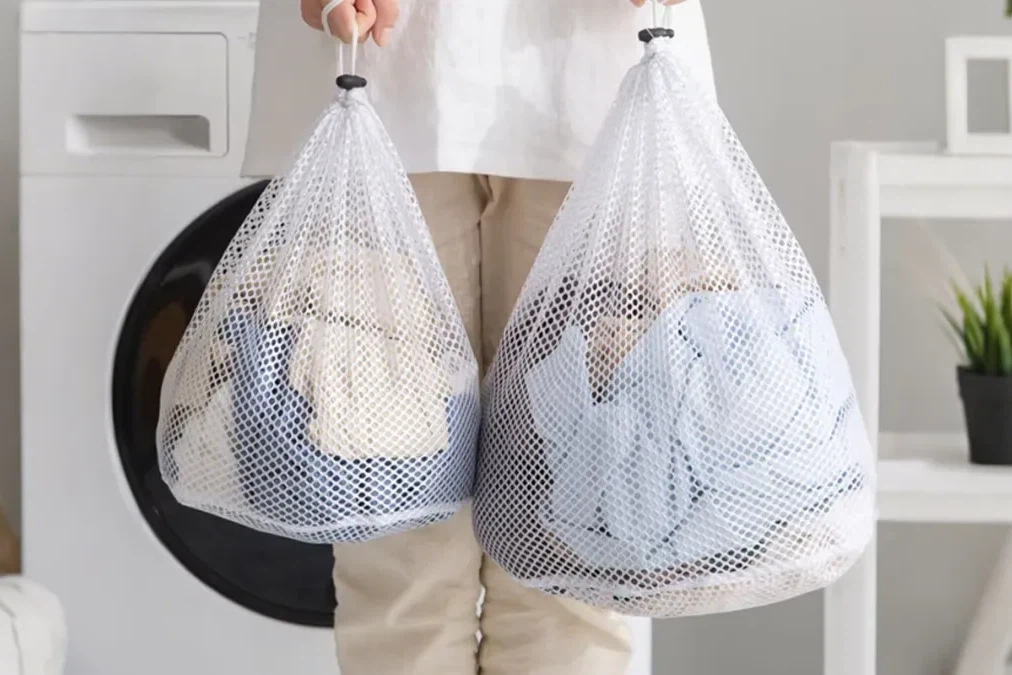
Washing machines are harder on delicate fabrics than most people realize. Agitation creates friction, friction causes fiber damage, and fiber damage shows up gradually as pilling, loss of shape, and fading. A mesh bag acts as a buffer between the garment and both the drum and the other items sharing the cycle. Over many washes, this accumulated protection becomes visible in how your clothing holds up.
No More Lost Small Items
Socks, baby mittens, and accessories that go in loose regularly go missing by the end of a cycle. A zipped mesh bag keeps everything in one place from start to finish - no sorting through a full machine to find one earring.
Reduced Color Transfer
Keeping a bright new garment or a deeply dyed piece in a mesh bag adds a layer of physical separation between it and lighter fabrics, reducing the chance of dye migrating during the wash.
Longer Garment Life
Delicates that are consistently washed in a mesh bag tend to hold their shape and color better over time. For quality clothing worth keeping, that translates directly into fewer replacements - a meaningful outcome whether you care about your wardrobe budget or reducing textile waste.
A Correction on Microfiber Shedding
You may have seen claims that mesh laundry bags help capture microfiber pollution from synthetic fabrics. This is worth clarifying. Standard mesh bags - with typical opening sizes of 0.5 to 2mm - are not designed to trap microfibers, which are simply too fine to be stopped by standard mesh. Products engineered specifically for microfiber capture use ultra-fine filtration fabric and are a different product category entirely. If reducing microfiber shedding is your goal, a standard wash bag will not achieve it.
Where mesh bags do contribute to more sustainable laundry habits is through durability and garment longevity - they are reusable, they reduce how often delicate clothing needs replacing, and they eliminate single-use alternatives. For a broader view of how bag material choices affect environmental impact, this comparison of bag materials by sustainability covers the trade-offs clearly.
How to Use a Mesh Laundry Bag
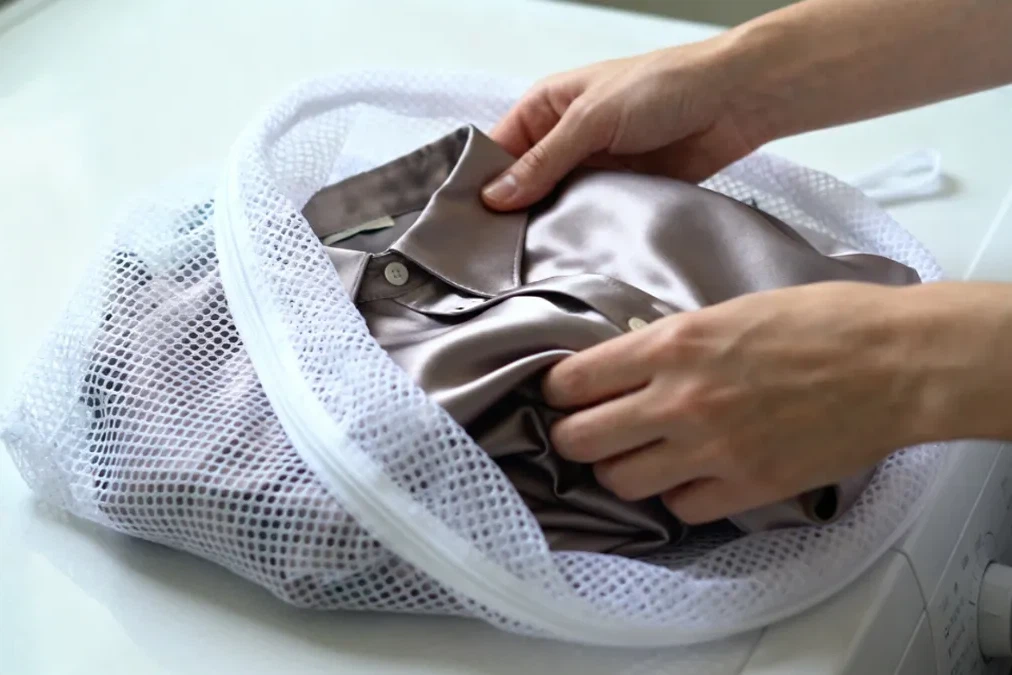
Used correctly, a mesh bag adds about 30 seconds to your laundry routine. The sequence below is the one that consistently delivers results - and the two-thirds capacity rule at Step 2 is the one that matters most.
Step 1: Sort before you load. Pull out anything delicate before the rest of the laundry goes in. Identifying items in advance prevents the scramble of fishing things out mid-load.
Step 2: Load loosely - no more than two-thirds full. Place items in the bag without cramming. An overstuffed bag prevents water and detergent from circulating properly through the mesh, which means clothes come out less clean than if you had used no bag at all. This is the most common error, and the one most worth avoiding.
Step 3: Zip completely shut. Run the zipper all the way to the end. A half-closed zipper is worse than no bag - items work their way out and create exactly the tangling you were trying to prevent.
Step 4: Add it to the regular load. No special placement is needed. The bag goes in with everything else.
Step 5: Choose the right cycle. The delicate or gentle cycle is the appropriate choice for anything that needed a mesh bag in the first place. Use cold or lukewarm water - hot water damages elastics, accelerates dye transfer, and can shrink natural fibers. This applies equally in top-load and front-load machines, including high-efficiency models.
Step 6: Remove and reshape promptly. Take garments out of the bag as soon as the cycle ends. Leaving damp items zipped inside encourages mildew. Reshape bras and knitwear while still damp, then air dry flat or tumble dry on the lowest heat setting available.
Four Mistakes That Reduce Effectiveness
- Overstuffing - if the mesh is stretched flat by the contents, water cannot reach the garments properly
- Mixing incompatible items - a bra with metal hooks sharing a bag with fine lace creates a snag problem inside the bag itself
- Hot water - temperature damages elastics and natural fibers whether or not a mesh bag is involved
- Leaving items zipped inside after washing - traps moisture and leads to mildew in the bag and on the garments
How to Choose the Right Mesh Laundry Bag
Not all mesh bags are built equally. These are the decisions that actually affect performance.
Size: Match the Bag to the Garment
Getting the size right matters more than any other specification. A garment should sit loosely inside without awkward folding or compression. If you are forcing it in, the bag is too small.
| Size | Approximate Range | Best For |
|---|---|---|
| Small | ~9"×12" to 12"×16" | Bras, underwear, socks, hosiery, baby items |
| Medium | ~16"×20" | Blouses, silk tops, tights, light sweaters, leggings |
| Large | ~20"×24" and above | Heavier sweaters, cardigans, light jackets, or batching several medium items |
Note: dimensions vary between manufacturers - use these as approximate guides, not fixed standards, when comparing products.
The polyester laundry bag range shows the variety of sizes and styles available. The zipper mesh laundry bag is a useful reference point for what a properly covered zipper closure looks like - the zipper head should be fully enclosed so it cannot scratch the drum or adjacent garments.
Fine Mesh vs. Coarser Mesh
Fine mesh (tighter weave) suits the most delicate items - lingerie, lace, embellishments, and hosiery. It creates a closer physical barrier and limits snag points at the fabric level. Coarser mesh allows more water flow, which is adequate for everyday delicates like blouses, light sweaters, and socks.
If you are buying one type to cover most needs, fine mesh is the more versatile option. A coarser weave may not provide enough protection for your most fragile garments. For more on how fabric construction affects performance and durability, this guide on polyester fabric weight and durability explains the specs that actually matter in everyday use.
Zipper vs. Drawstring
A zipper with a fabric or elastic cover over the head is the better design for most situations. It keeps items reliably contained throughout the cycle, and the cover protects both the garments and the drum. The hot-transfer polyester mesh laundry bag is a solid example of a covered-zipper construction worth examining as a baseline before buying.
Drawstring bags are easier to open and close but carry a genuine risk of smaller items escaping during an active cycle. They are acceptable for heavier, less fragile items - not for lingerie or hosiery.
How Many Do You Actually Need?
For most households, a set of four to six bags in mixed sizes is enough to cover typical laundry needs:
- 2 small bags - dedicated to bras and lingerie
- 2 medium bags - for blouses, silk tops, and tights
- 1–2 large bags - for sweaters, or batching smaller items on a heavy laundry day
Dedicating specific bags to specific item types removes the guesswork and reduces the chance of accidentally mixing incompatible garments in the same bag. For larger or sturdier laundry needs - gym gear, bulk household washing, or dormitory laundry - non-woven laundry bags and cotton laundry bags offer different material properties better suited to heavier loads.
Mesh Bag vs. Just Using a Pillowcase
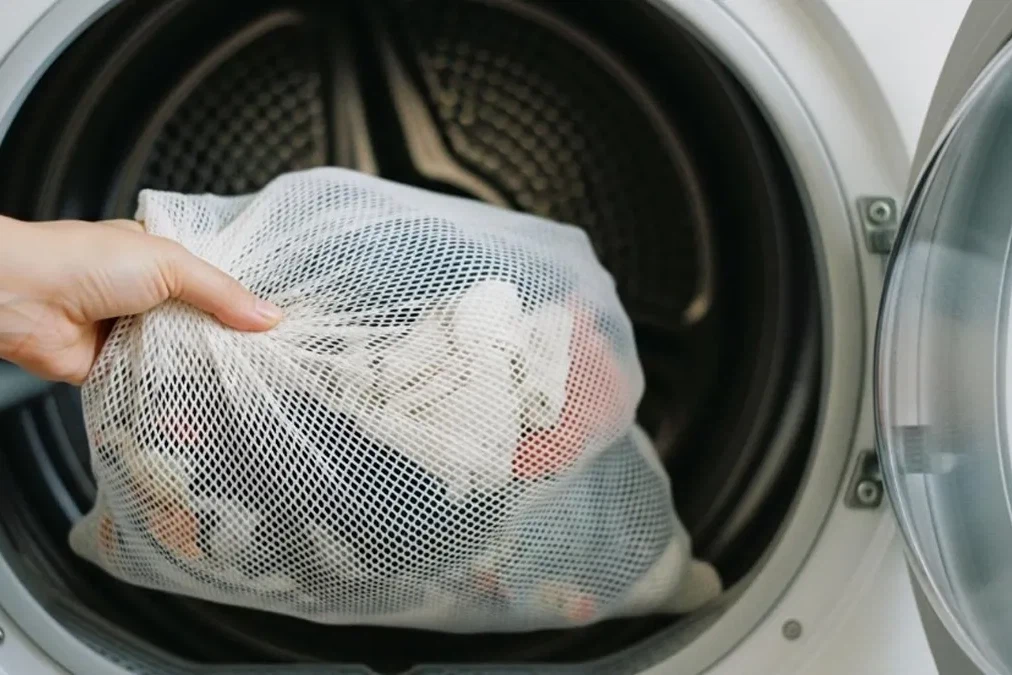
A pillowcase is the most common improvised substitute - and it is better than nothing. But there are practical differences that become noticeable when you use it regularly for garments you care about.
| Feature | Mesh Laundry Bag | Pillowcase |
|---|---|---|
| Water and detergent flow | Excellent - open weave design | Reduced - fabric absorbs and slows flow |
| Visibility of contents | Easy to check before and after | Cannot see inside |
| Closure security | Zipper - reliable throughout the cycle | Open end - items can escape |
| Protection level | High, consistent | Moderate; varies with pillowcase fabric |
| Purpose | Built for machine washing | Improvised workaround |
A pillowcase will serve in an emergency. For garments you wash repeatedly and want to last, a purpose-built mesh bag cleans better and protects more consistently - chiefly because the open weave keeps water and detergent in active contact with the fabric rather than blocked by solid cloth.
Frequently Asked Questions
Can mesh laundry bags go in the dryer?
Most polyester and nylon mesh bags are dryer-safe on a low heat setting. Many of the garments you would put inside - lingerie, silk, knitwear - are better air dried regardless of the bag. Unzip and remove contents promptly after the wash cycle ends; do not tumble dry items while still zipped inside the bag.
Do mesh laundry bags actually clean clothes properly?
Yes, provided the bag is not overstuffed. The open-weave construction allows full water and detergent contact with the fabric throughout the cycle. The two-thirds capacity rule exists precisely to ensure this circulation is not blocked.
Can I put multiple bras in the same bag?
It is better not to. Underwire hooks can catch each other inside the bag and cause damage from within. Hook each bra closed first, and give each its own small bag when possible. Two small bras in one larger bag can work, but only if the hooks are secured and the bag is not overfull.
Do mesh bags work in HE (high-efficiency) machines?
Yes - they work in both top-load and front-load machines, including high-efficiency models. The gentler tumble action in HE machines is, if anything, well-suited to the delicate items typically washed in a mesh bag.
Can I wash shoes in a mesh laundry bag?
Lightweight canvas or mesh sneakers can sometimes be machine-washed in a large mesh bag on a cold, gentle cycle. Leather, suede, and structured shoes should never be machine-washed, bag or not. Always check the manufacturer's care instructions first.
What is the difference between a mesh laundry bag and a garment bag?
A mesh laundry bag is designed for use inside a washing machine - its open weave allows water and detergent through while protecting garments from agitation. A garment bag (the kind used for dry cleaning pickup, storage, or travel) is made from solid fabric and is not intended for the washing machine.
How long does a mesh laundry bag last?
With regular use and basic care, a quality mesh bag will often hold up well for a year or more - though this varies considerably with wash frequency, water temperature habits, and zipper maintenance. Check the zipper teeth periodically for wear or bending. Replace the bag when the mesh tears or the zipper fails; a damaged bag can cause more harm to garments than using no bag at all.
The Bottom Line
A mesh laundry bag earns its place quickly. The first time a silk blouse comes out of the wash in the same condition it went in - or a complete pair of socks actually makes it back together - the habit tends to stick.
Start with the items you wash most often and value most: bras, delicate tops, knitwear. Get the size right so each garment sits loosely rather than compressed, zip it fully, and use a cool, gentle cycle. That covers the full approach.
For a look at options across sizes and constructions, the polyester laundry bag is a solid starting point for standard use. If your needs run toward larger or heavier laundry loads, this guide on large recyclable laundry bags covers the material and sizing questions worth answering before you buy.