a cotton insulated bag keeps food cold for 3 to 6 hours, outlasts most synthetic alternatives by two to three years, accepts every major print technique, and looks like something people actually want to carry - all in one product. If you're deciding whether cotton with an insulated lining is the right format for your next bag order, retail line, or corporate gift campaign, this is the breakdown you need.
Below we cover what these bags actually are, what makes them work, where they genuinely outperform the competition, and where they don't. We also include a material comparison table, a sourcing checklist, and answers to the questions we hear most from buyers.

What Is a Cotton Insulated Bag, and How Does It Work?
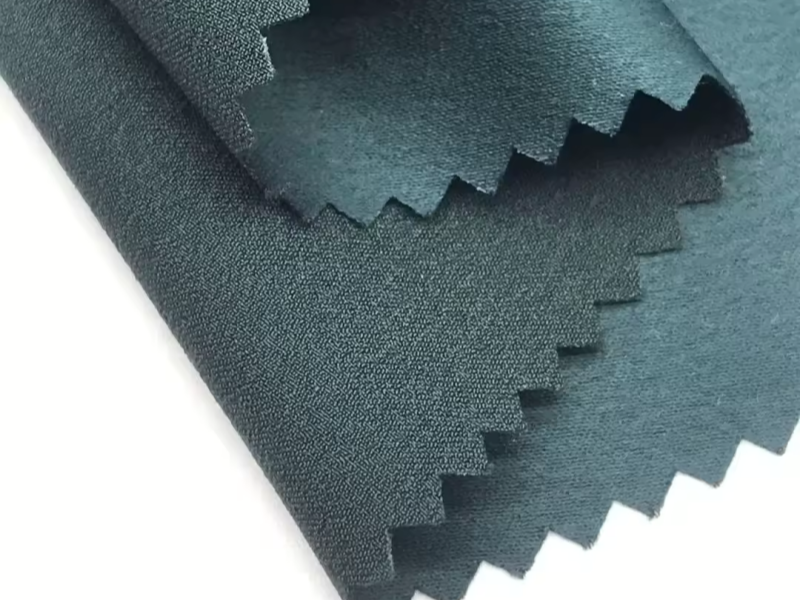
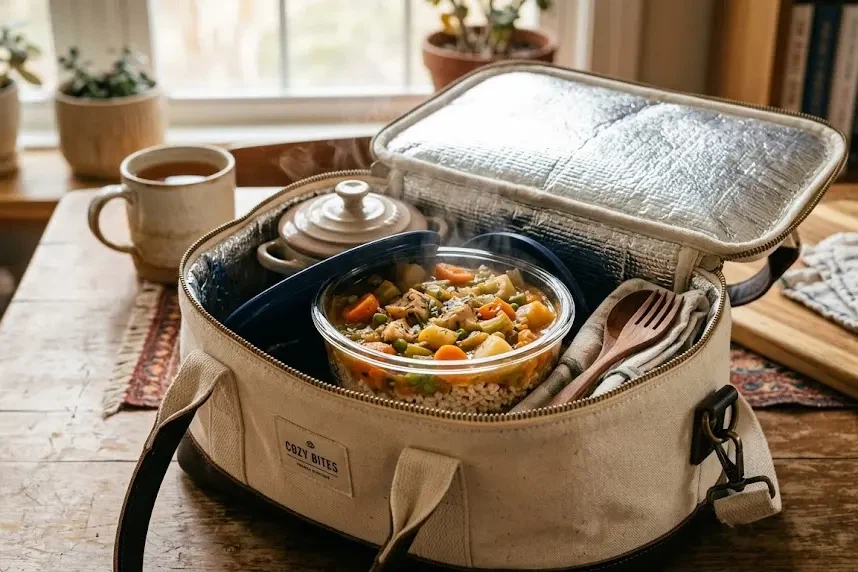
A cotton insulated bag - sometimes called an insulated cotton tote or a thermal cotton bag - pairs a natural cotton outer shell with an inner lining designed to slow heat transfer. The outer fabric is typically canvas or woven cotton in the 10–14 oz range (roughly 280–400 GSM). The inner lining is usually one of three materials: reflective aluminum foil, PEVA (polyethylene-vinyl acetate), or a foam-backed composite.
Each lining type behaves differently. Aluminum foil reflects radiant heat back toward the contents - the same principle used in emergency thermal blankets. PEVA adds a waterproof barrier on top of the insulating layer, which matters for bags carrying wet or condensation-prone items. Foam-backed liners add bulk insulation but increase the bag's packed weight. For most everyday applications - lunch bags, grocery runs, short food delivery - an aluminum foil or PEVA lining in a well-constructed cotton cooler bag is sufficient.
What makes the cotton outer layer more than decorative is the fiber structure itself. Cotton creates microscopic air pockets throughout the weave that act as a secondary thermal buffer - slowing the rate at which ambient temperature reaches the insulated interior. The result is a bag that performs better than its lining alone would suggest.
10 Reasons Cotton Insulated Tote Bags Are the Smarter Choice
1. Real Temperature Retention - How Long a Cotton Insulated Bag Actually Keeps Food Cold
A cotton insulated bag with an aluminum foil or PEVA inner lining maintains refrigerated temperatures (below 40°F / 4°C) for approximately 3 to 6 hours under typical ambient conditions: room temperature, bag kept closed, contents pre-chilled. Add a reusable ice pack and that window extends to 8 to 10 hours for all-day use.
That's comparable to most entry- and mid-level insulated polyester cooler bags sold at retail. The material difference shows up elsewhere: the cotton outer layer breathes, which means condensation from the cold interior doesn't pool inside the bag the way it does with fully synthetic designs. Less moisture buildup means the lining stays intact longer and the bag doesn't develop the odor problems that are common with sealed synthetic coolers after a few months of use.
The same thermal logic applies in reverse. Cotton reflects ambient heat rather than absorbing it, so on a warm day the bag doesn't heat up from the outside as quickly as a dark-colored polyester alternative would. For hot food transport - catering, meal delivery, restaurant takeout - the insulated interior redirects radiant heat back toward the contents rather than allowing it to dissipate through the walls.
2. Cotton's Breathability Keeps an Insulated Lunch Bag Fresher Between Washes
Cotton is hygroscopic, meaning it absorbs and releases moisture rather than trapping it. For a bag used to carry food daily, this matters more than it sounds. Fully synthetic insulated bags create sealed microclimates that trap humidity, which accelerates the growth of odor-causing bacteria on interior surfaces. Cotton's natural moisture exchange keeps the bag environment more stable between cleanings.
This doesn't mean cotton insulated bags are self-cleaning - they still need regular washing. But the difference in how quickly a synthetic bag starts to smell versus how long a cotton bag stays neutral is noticeable. In our experience supplying bags to grocery retailers and food service operators, cotton bags generate significantly fewer customer complaints about interior odor over a 12-month period than comparable polyester designs.

3. Long-Term Durability: Why Cotton Canvas Outlasts Thin Synthetic Bags in Real Use
Canvas and heavyweight cotton are among the most structurally resilient textiles in everyday commercial production. A bag made from 12 oz (340 GSM) cotton canvas with reinforced seams and X-bar stitching at the handle attachment points will absorb daily use for years without structural failure. Thinner polyester bags - the kind commonly produced at 210D to 420D - typically show handle strain and seam fraying within 12 to 18 months of daily use. A cotton canvas bag at equivalent construction grades outlasts them by two to three years, based on our production and return data across multiple retail clients.
The implication for cost-per-use economics is significant. A cotton insulated bag running $5 to $9 per unit at wholesale, used daily for three years, is a fraction of a cent per use. A $1.50 synthetic bag that needs replacing annually costs more over the same period and generates three times the waste. For buyers thinking about brand impressions per dollar spent, durability is the most underrated specification on the order sheet. Our cotton shopping bags are built on the same canvas weight logic - fabric grade first, then construction, then aesthetics.
4. Machine Washable: The Practical Advantage That Keeps Insulated Cotton Totes in Daily Rotation
Most insulated bags made from hard-shell or fully coated synthetic materials can only be wiped down. Cotton insulated bags - when the outer shell is preshrunk during manufacturing - can go through standard washing machine cycles without shrinking or losing shape. The inner lining is wiped clean separately, or detached for independent washing in designs that support it.
This distinction has a direct effect on how often consumers actually use the bag. A bag that gets a food stain and can't be washed properly gets retired after one or two incidents. A cotton bag that comes out of the washing machine looking clean goes back into the drawer and gets used again. Over a product's lifespan, washability is one of the strongest predictors of actual reuse rates - which in turn is the only metric that justifies the environmental and economic case for any reusable bag.
5. Print and Decoration: Cotton Accepts More Techniques Than Any Synthetic Alternative
Cotton's open fiber structure accepts a wider range of decoration techniques than coated synthetic surfaces. Screen printing on cotton canvas produces vivid, durable graphics that hold through dozens of wash cycles. Embroidery creates a premium tactile finish - a brand mark that reads as intentional and high-quality in a way that's simply not possible on a coated polyester surface. Heat transfer and direct-to-garment printing also perform well on cotton, giving brand teams genuine flexibility rather than forcing a single technique.
For branded and promotional bag programs, this matters beyond aesthetics. A well-printed cotton bag with strong construction communicates something about the brand behind it. We've produced bags for clients across retail, hospitality, and corporate gifting where the brief specifically called for embroidery - a technique that rules out every synthetic format by default. If customization depth is a priority for your program, our OEM and ODM services cover all of these decoration methods with pre-production samples before any bulk commitment.
6. The Honest Environmental Case for Cotton Insulated Bags
The environmental argument for cotton is real, but it has limits that are worth stating clearly. A 2011 study by the UK Environment Agency found that a standard cotton tote bag must be used approximately 131 times before its carbon footprint matches that of a single-use plastic bag - due to the water and energy intensity of cotton farming. That figure is widely cited and should be part of any honest conversation about cotton sustainability. You can read the National Geographic Society's overview of the study here.
A cotton insulated bag used daily for work or grocery trips crosses that 131-use threshold within two to three months. After that, every use is net positive relative to the disposable alternative it replaces. The biodegradability advantage is also real: cotton decomposes within months to a few years depending on conditions, while synthetic materials persist for decades. GOTS-certified and OEKO-TEX Standard 100-certified cotton - both available across our production lines - substantially reduces the pesticide and water footprint relative to conventional cotton farming.
The honest position for brands: cotton sourced to a recognized certification standard, used repeatedly over years, and communicated accurately to consumers, is a defensible and genuine sustainability choice. It's a stronger position than switching to a synthetic material with "recycled" in the marketing copy but no lifecycle data behind it. For programs that do call for recycled synthetic options, our cotton duffel bags and polyester alternatives can be spec'd side by side to let buyers make the comparison directly.
7. Who Actually Buys Cotton Insulated Bags - and Why It Matters for Brand Programs
The buyers who choose cotton over synthetic in the bag category tend to be making a deliberate materials decision - they've considered the options and selected natural fiber for reasons of feel, sustainability alignment, or brand positioning. That self-selection creates a useful dynamic for brands: a cotton insulated bag given as a corporate gift or sold as a retail item reaches people who are predisposed to use it regularly and keep it.
In the accounts we supply for retail and promotional use, the reorder pattern for cotton-format bags is more consistent than for comparable non-woven or polyester programs. Customers come back for more because recipients actually use them. That's not a market research claim - it's what we see in order history across clients who've run both formats. The bag that gets used generates ongoing brand visibility. The bag that gets put in a closet after one trip doesn't.
Plastic bag regulations in California, New York, Colorado, and more than a dozen other US states have also accelerated the retail market for premium reusable options. Retailers looking to stock alternatives that customers will pay for and use repeatedly are increasingly landing on cotton-exterior insulated formats as the format that delivers both functionality and perceived value.
8. Food-Contact Safety: What the Inner Lining Material Actually Needs to Meet
The food safety question for insulated bags is less about the cotton exterior and almost entirely about the inner lining material. PEVA liners - polyethylene-vinyl acetate, free of chlorine and BPA - are the standard food-safe option for insulated bag linings. Aluminum foil linings with a polyester backing are also appropriate for direct food contact. Both can be certified under OEKO-TEX Standard 100, which tests for the presence of harmful substances at every stage of production.
What to avoid: bags with unspecified "thermal fabric" or "thermal lining" descriptions where the exact material composition isn't disclosed. Some lower-cost alternatives use PVC or multi-layer composite materials that aren't rated for repeated food contact, particularly at temperature extremes. For buyers supplying to food service operators, grocery chains, or health product retailers, food-contact certification isn't a differentiator - it's a minimum procurement requirement. Ask for the material safety data sheet before placing a bulk order. The difference between non-woven insulated bags and cotton insulated options often comes down precisely to what's verifiable about the lining.
9. Weight and Capacity: Addressing the Common Objection to Cotton
The objection that cotton bags are heavier than synthetic alternatives is accurate for plain tote formats - but it applies with much less force to insulated bags, where the thermal lining adds weight regardless of the outer material. A cotton canvas insulated bag in a standard medium lunch tote size (approximately 13 × 15 × 4 inches) typically weighs between 14 and 18 oz complete with lining - comparable to a mid-weight insulated polyester bag of the same dimensions and lining specification.
Where cotton does carry a structural advantage is shape retention under load. Higher tensile strength at the relevant canvas weights means the bag holds its form when filled, which consumers consistently prefer for ergonomic reasons - the bag sits on a shoulder rather than collapsing against the side. Cotton's natural drape also means the bag folds flat when empty without the crumpling behavior common in lighter synthetic bags. In our experience, this influences whether a bag gets kept out for daily use or ends up stored away: bags that fold and store cleanly get grabbed more often.

10. Multi-Context Use: Why an Insulated Cotton Tote Stays in Rotation Longer Than a Cooler Bag
A synthetic insulated cooler bag looks like a cooler bag. It lives in the car trunk or the camping gear, and comes out for picnics. A cotton insulated tote looks like a bag - the kind people carry to the office, the farmers market, the school pickup line, and the gym without thinking twice. That distinction determines actual use frequency more than any specification on a data sheet.
Multi-occasion use is what makes the economics and environmental case for any reusable bag work. A bag used daily for three years generates thousands of use cycles. A bag used monthly for occasional outings generates dozens. Cotton's material feel and visual neutrality are the reasons it crosses over between contexts that synthetic formats can't. Our cotton travel bags and cotton beach bags are built around exactly this logic - the same material and construction adapted for contexts beyond the grocery run.
Cotton vs. Polyester vs. Non-Woven: Insulated Bag Format Comparison
All three formats perform the same core function - slowing heat transfer during transit. The differences show up in durability, print quality, use occasions, and total cost of ownership. Here's how they compare across the specifications that matter most for bulk sourcing decisions:
| Specification | Cotton Insulated | Polyester Insulated | Non-Woven Insulated |
|---|---|---|---|
| Cold retention (standard lining) | 3–6 hours | 3–6 hours | 2–4 hours |
| Expected lifespan (daily use) | 3–5 years | 1–2 years | 6–18 months |
| Washability | Machine washable | Wipe-clean / hand wash | Wipe-clean only |
| Print / decoration options | Screen, embroidery, heat transfer, DTG | Screen, heat transfer | Screen, heat transfer |
| Biodegradability | Yes (months to years) | No (decades) | No (decades) |
| Typical wholesale unit cost | $5–9 | $2–5 | $1–3 |
| Best fit for | Retail, corporate gifts, daily carry | Food delivery, high-volume promos | Single-season campaigns, economy tier |
Polyester insulated bags are the right choice when per-unit cost is the dominant constraint and the bags will be distributed at volume for short-term use. If you're weighing polyester against cotton for a specific program, our complete polyester tote bag sourcing guide covers specs, denier grades, and handle construction in detail. Non-woven insulated options occupy the economy tier - useful for single-campaign applications where longevity isn't required. Cotton insulated bags are the correct choice when the bag needs to represent a brand over an extended period, withstand daily use, or reach an audience that expects material quality.
What to Check Before Placing a Bulk Order for Cotton Insulated Bags
Fabric weight is the first specification to nail down. For a bag expected to carry groceries or lunch items daily, canvas at 12 oz (340 GSM) or heavier is the practical minimum for structural longevity. Lighter weights - 8 to 10 oz - are appropriate for lighter use cases or budget-sensitive programs where lifespan is not the primary requirement.
The inner lining material and its certifications should be confirmed before production starts. Request the material composition in writing and ask whether it carries OEKO-TEX Standard 100 or an equivalent food-contact certification. For products going into European markets, REACH compliance is a mandatory check. For US distribution, confirm CPSC guidelines apply to the lining materials used.
Handle construction is a frequent failure point in lower-cost production. Handles stitched with X-bar patterns at the attachment points distribute load stress across a wider area and resist tearing significantly better than straight-stitch alternatives. Woven webbing handles are stronger and more comfortable than thin ribbon handles under load. Ask your supplier to specify the stitch pattern before production, or request a stress-test on pre-production samples.
Gusset depth determines how much the bag can carry. A 4 to 6 inch gusset accommodates standard lunch and grocery volumes without stressing the side seams. Shallower gussets work for lighter, flatter loads - document bags, promotional totes - but are a poor fit for food service applications where the bag needs to hold upright and full.
Our full range of cotton bags includes options across these specification tiers, and we provide pre-production samples on all OEM orders. If you're working through the material selection for a specific project, reach out directly - we can match the specification to the use case before the order is placed.
Frequently Asked Questions About Cotton Insulated Bags
What is the difference between a cotton insulated bag and a regular cotton tote?
A regular cotton tote has no thermal lining - it offers no meaningful temperature retention and is not appropriate for carrying food that needs to stay cold or hot. A cotton insulated bag has an inner lining (aluminum foil, PEVA, or foam-backed composite) that slows heat transfer, keeping cold contents cold and hot contents warm for several hours. The outer cotton shell is the same material; the functional difference is entirely in the lining. If temperature control matters for your use case, a plain cotton tote is not a substitute.
How long do cotton insulated bags keep food cold?
With a standard aluminum foil or PEVA lining, a cotton insulated bag maintains temperatures below 40°F for approximately 3 to 6 hours at typical room temperature, with the bag kept closed and contents pre-chilled. Performance depends on lining thickness, ambient temperature, and how frequently the bag is opened. Adding a gel ice pack extends the effective window to 8 to 10 hours, making them suitable for full-day use.
Are cotton insulated bags safe for carrying food?
Yes - provided the inner lining material is rated for food contact. Look for PEVA liners (chlorine-free and BPA-free) or aluminum foil linings with OEKO-TEX Standard 100 certification. Avoid bags where the lining material is described only as "thermal fabric" with no further specification, as some lower-grade alternatives use PVC or unidentified composite materials that may not be appropriate for direct food contact at temperature extremes.
Can cotton insulated bags go in the washing machine?
The outer cotton shell can be machine washed on standard cycles when the fabric has been preshrunk during manufacturing - most quality production bags meet this requirement. The inner lining should be wiped clean separately; foam-backed liners may require hand washing or cold cycles to prevent the foam layer from delaminating. Always check the care label or ask your supplier to confirm the washing specification for the specific bag you're ordering.
What's the minimum order quantity for custom cotton insulated bags?
MOQ varies by factory, customization level, and bag specification. At PrintTotes, we accommodate both mid-sized promotional campaigns and large retail programs with flexible minimums. Pre-production samples are available on all OEM orders to confirm material, print quality, and construction before full production begins.
Do cotton insulated bags work for keeping hot food warm?
Yes. The same thermal barrier that slows cold loss also slows heat loss. The reflective inner lining redirects radiant heat back toward the bag contents rather than allowing it to pass through the walls. Cotton insulated bags are used routinely for catering, restaurant takeout, and meal delivery applications - anywhere temperature retention during transport matters.
How do cotton and non-woven insulated bags compare for a bulk order?
Non-woven insulated bags cost less per unit and are the right choice when budget is the primary constraint and the bags will be used infrequently or for a single campaign. Cotton insulated bags cost more upfront but last significantly longer, wash clean, and communicate a higher material quality to the end user. For programs where the bag will be used daily and needs to represent the brand over an extended period, the total cost of ownership generally favors cotton despite the higher unit price.
Written by the sourcing and product team at PrintTotes (Max Profit Limited), with 18+ years of OEM bag manufacturing experience. We produce cotton, polyester, and non-woven bag formats for retail, corporate, and food service clients worldwide.